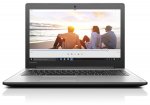
Priced reduced on this great spec laptop to just £499! Great for an full HD, i7 with 2tb!
And before anyone else says it - I know it isn't SSD! :wink:
Top comments
yoyelp to Duckman
7 Jan 1710#7
Because they use different controllers. Only since Ivy Bridge microarchitecture Intel included USB 3.0 controller into their chipsets. So manufacturers must use a separate USB 3.0 controller from other companies if they want to provide a USB 3.0 port in mainboards using Sandy Bridge and older chipsets. That makes designing more complex beside taking more mainboard area and power.
One important point is that most external controllers often only supports 2 ports, and one may be used internally for some purpose, only one is exposed to users and that's why you often see old laptops with only 1 USB 3.o port and 1-3 more USB 2.0 ports from native controller inside the chipset. Newer laptops may have more or all USB 3.0 ports.
This is also the same reason for some mainboards have different SATA port
fishmaster to The Lone Ranger
7 Jan 176#14
HDDs and SSDs are very much slower than the various other busses in the computer. SSDs are much faster because of the much reduced latency and secondly usually have much improved sequential read/write times as well.
A computer will keep programs in to RAM, you can test this yourself, if you have a HDD rather than SSD, boot up your PC and immediately load your web browser and time how long it takes to load, next close the browser and reopen it, you'll see it will load much quicker than before. Why is this? This is because the computer has to load the data from the very slow hard drive to the RAM, once the program is in RAM the computer will decide whether to keep it there or not based on various factors. So next time you open the web browser, the operating system (OS) says ah yes I thought you might want to do that, so I've kept the program in RAM. RAM speeds are in the order of many GB/s (gigabytes per second). This is still the same for SSDs but because of their improved latency, random read times and sequential read times you won't notice the difference as much as a HDD. All SSDs and HDDs based on SATA 3/III (6GB/s) bus are in the order of many MB/s (Megabytes per second) and therefore considerably slower than RAM. Even the fastest SSDs are no match for modern DDR3/DDR4 RAM speeds.
The above is essentially a not too technical description of what happens. It's also the reason why task killers are a very bad idea on modern phone/tablet OS's, so long as you have enough RAM, it's better to keep the programs in RAM than freeing up the RAM, a task killer works against the principles which make the OS faster. There comes a point where having more RAM won't help you simply because in general usage you'll never be able to saturate it. If you can't use your RAM effectively then it's essentially a waste.
Lastly Intel are pulling the wool over the eyes of the consumer, for quite some time now they've had dual core i7 CPUs, where as in the past i7's were always quad core. Therefore there's little difference between the i3.i5.i7 tiers except clock speed and cache. Clock speed can be taken in to consideration as a comparison as it's the same architecture being compared.
TL;DR : Yes change the HDD for SSD you will see a big improvement in performance.
Duckman
7 Jan 175#4
Potentially daft question, but why do all computers come with 2 x USB 2 and 1 x USB 3? USB 3s are compatible with 2, right? I don't understand why they don't do all 3 ports. Again, I'm not techy, so possibly missing something obvious, but I'd love to know.
BrianSewell
7 Jan 174#24
So you completely missed his point, spent hundreds of words failing to answer his simple question, then got petulant.
A good mornings work, well done!
All comments (56)
jasee
7 Jan 171#1
Not a bad spec.
Item Weight 2.1 Kg
Product Dimensions 26 x 37.9 x 2.3 cm
Batteries: 1 Lithium Polymer batteries required. (included)
Item model number 80SM00D1UK
Series Ideapad 310-15ISK
Color Silver
Form Factor Notebook
Screen Size 15.6 inches
Screen Resolution 1920 x 1080 pixels
Maximum Display Resolution 1920 x 1080 pixels
Processor Brand Intel
Processor Type Core i7
Processor Speed 2.5 GHz
Processor Count 2
RAM Size 8 GB
Computer Memory Type DDR4 SDRAM
Hard Drive Size 2000 GB
Hard Disk Technology HDD
Graphics Coprocessor Nvidia
Graphics Card Description NVIDIA GeForce 920MX
Graphics RAM Type GDDR3
Graphics Card Ram Size 2048
Connectivity Type 802_11_AC
Wireless Type 802.11 A/C
Number of USB 2.0 Ports 2
Number of USB 3.0 Ports 1
Number of HDMI Ports 1
Optical Drive Type DVD reader/writer
Hardware Platform Windows
Operating System Windows 10
Average Battery Life (in hours) 5 hours
Lithium Battery Energy Content 30 watt_hours
Lithium Battery Packaging batteries_contained_in_equipment
chrisredmayne
7 Jan 172#2
you can get a 950m and an ssd for slightly more than this. an i7 doesnt benchmark much much than an i5 on laptops...
5Rivers79 to chrisredmayne
7 Jan 17#3
Do you have a link please?
Duckman
7 Jan 175#4
Potentially daft question, but why do all computers come with 2 x USB 2 and 1 x USB 3? USB 3s are compatible with 2, right? I don't understand why they don't do all 3 ports. Again, I'm not techy, so possibly missing something obvious, but I'd love to know.
yoyelp to Duckman
7 Jan 1710#7
Because they use different controllers. Only since Ivy Bridge microarchitecture Intel included USB 3.0 controller into their chipsets. So manufacturers must use a separate USB 3.0 controller from other companies if they want to provide a USB 3.0 port in mainboards using Sandy Bridge and older chipsets. That makes designing more complex beside taking more mainboard area and power.
One important point is that most external controllers often only supports 2 ports, and one may be used internally for some purpose, only one is exposed to users and that's why you often see old laptops with only 1 USB 3.o port and 1-3 more USB 2.0 ports from native controller inside the chipset. Newer laptops may have more or all USB 3.0 ports.
This is also the same reason for some mainboards have different SATA port
fishmaster to Duckman
7 Jan 17#13
You're incorrect. It's usually the reverse these days as in 2 x USB 3.0 and 1 x USB 2.0 and some USB 3.0 only. When USB 3.0 was first rolled out, it was common to see the configuration you state, as the years have gone by it now common to see more USB 3.0 ports than USB 2.0 on laptops. Anyway I see your question was answered earlier.
myapps to Duckman
7 Jan 172#21
Not a daft question, I asked the same thing on a post yesterday. :smiley: I found this though which was interesting.
from my own personal experience, I've had it before where I've plugged in an old USB 2 device into a USB 3 port and its just not behaved as it should. even though there's backward compatibility I would say that sometimes it isn't the case.
splatsplatsplat
7 Jan 17#6
A "U" processor so dual core.
Gkains to splatsplatsplat
7 Jan 171#11
Yes, not just 'U' models as most (all) i7 'M' were dual core too. Only i7 with HQ, MX, MQ are ever quad core with HT (4/:sunglasses:, everything else is pretty much two core with HT (2/4) same as mobile i3 and i5 except for bigger caches and higher clocks/boosts.
Yes, the PassMark scores reflect this (single-threaded in brackets):
i7-6500U @ 2.50GHz = 4296 (1639)
i5-6200U @ 2.30GHz = 3912 (1497)
i3-6100U @ 2.30GHz* = 3427 (1320) * but no turbo
mr_hercules
7 Jan 171#8
Does anyone know if this would be suitable for using Autodesk Inventor smoothly? Thanks in advance

![Fresh Breakfast Meat Box (Using code) @ Campbells Meat [Haggis / Lorne Sausage / Bacon / Black Pudding & More]](/images/topics/208684_1.jpg)



































![[Xbox One] Q. u. b. e: Director's Cut on Deals with Gold](/images/topics/208716_1.jpg)

















Opening post
And before anyone else says it - I know it isn't SSD! :wink:
Top comments
One important point is that most external controllers often only supports 2 ports, and one may be used internally for some purpose, only one is exposed to users and that's why you often see old laptops with only 1 USB 3.o port and 1-3 more USB 2.0 ports from native controller inside the chipset. Newer laptops may have more or all USB 3.0 ports.
This is also the same reason for some mainboards have different SATA port
A computer will keep programs in to RAM, you can test this yourself, if you have a HDD rather than SSD, boot up your PC and immediately load your web browser and time how long it takes to load, next close the browser and reopen it, you'll see it will load much quicker than before. Why is this? This is because the computer has to load the data from the very slow hard drive to the RAM, once the program is in RAM the computer will decide whether to keep it there or not based on various factors. So next time you open the web browser, the operating system (OS) says ah yes I thought you might want to do that, so I've kept the program in RAM. RAM speeds are in the order of many GB/s (gigabytes per second). This is still the same for SSDs but because of their improved latency, random read times and sequential read times you won't notice the difference as much as a HDD. All SSDs and HDDs based on SATA 3/III (6GB/s) bus are in the order of many MB/s (Megabytes per second) and therefore considerably slower than RAM. Even the fastest SSDs are no match for modern DDR3/DDR4 RAM speeds.
The above is essentially a not too technical description of what happens. It's also the reason why task killers are a very bad idea on modern phone/tablet OS's, so long as you have enough RAM, it's better to keep the programs in RAM than freeing up the RAM, a task killer works against the principles which make the OS faster. There comes a point where having more RAM won't help you simply because in general usage you'll never be able to saturate it. If you can't use your RAM effectively then it's essentially a waste.
Lastly Intel are pulling the wool over the eyes of the consumer, for quite some time now they've had dual core i7 CPUs, where as in the past i7's were always quad core. Therefore there's little difference between the i3.i5.i7 tiers except clock speed and cache. Clock speed can be taken in to consideration as a comparison as it's the same architecture being compared.
TL;DR : Yes change the HDD for SSD you will see a big improvement in performance.
A good mornings work, well done!
All comments (56)
Item Weight 2.1 Kg
Product Dimensions 26 x 37.9 x 2.3 cm
Batteries: 1 Lithium Polymer batteries required. (included)
Item model number 80SM00D1UK
Series Ideapad 310-15ISK
Color Silver
Form Factor Notebook
Screen Size 15.6 inches
Screen Resolution 1920 x 1080 pixels
Maximum Display Resolution 1920 x 1080 pixels
Processor Brand Intel
Processor Type Core i7
Processor Speed 2.5 GHz
Processor Count 2
RAM Size 8 GB
Computer Memory Type DDR4 SDRAM
Hard Drive Size 2000 GB
Hard Disk Technology HDD
Graphics Coprocessor Nvidia
Graphics Card Description NVIDIA GeForce 920MX
Graphics RAM Type GDDR3
Graphics Card Ram Size 2048
Connectivity Type 802_11_AC
Wireless Type 802.11 A/C
Number of USB 2.0 Ports 2
Number of USB 3.0 Ports 1
Number of HDMI Ports 1
Optical Drive Type DVD reader/writer
Hardware Platform Windows
Operating System Windows 10
Average Battery Life (in hours) 5 hours
Lithium Battery Energy Content 30 watt_hours
Lithium Battery Packaging batteries_contained_in_equipment
One important point is that most external controllers often only supports 2 ports, and one may be used internally for some purpose, only one is exposed to users and that's why you often see old laptops with only 1 USB 3.o port and 1-3 more USB 2.0 ports from native controller inside the chipset. Newer laptops may have more or all USB 3.0 ports.
This is also the same reason for some mainboards have different SATA port
https://www.reddit.com/r/explainlikeimfive/comments/2hguhb/eli5_why_do_computer_manufacturers_still_include/
Yes, the PassMark scores reflect this (single-threaded in brackets):
i7-6500U @ 2.50GHz = 4296 (1639)
i5-6200U @ 2.30GHz = 3912 (1497)
i3-6100U @ 2.30GHz* = 3427 (1320) * but no turbo
Good if you need the storage
But for 499?
Dont think so