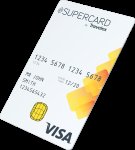
Visa Debit type card from Travelex. Charges no foreign transaction/conversion fees with the Visa exchange rate.
Sort of like a physical PayPal account as it's linked to your usual debit/credit card - your card will be charged in GBP. Interesting concept IMO and means I can close accounts specifically opened for foreign usage.
Fees apply for UK usage. It's not clear if cash withdrawals with a linked credit card would count as a cash or purchase transaction.
Launched May.
One clarification on twitter: you can only link to Visa or MasterCard, not Amex. https://twitter.com/SupercardUK/status/577582863295647745
- jnm21
Apologies for multiple edits - also confirmation that it will work for foreign websites like Amazon.de: https://twitter.com/SupercardUK/status/576072005042216960
- jnm21
Further cards released
Top comments
gulz
13 Mar 1537#59
I use Nationwide Select Credit Card for foreign currency purchases, and Nationwide Flex Plus (best paid current accounts out there) for cash withdrawals when abroad. So for that reason, I'm out:-)
Let me tell you guys what I know about payment transactions and FX rates, some might find it very interesting.
There are three main parties who take a small chunk of the money you pay to the retailer - the payment processor (normally a subsidiary of a financial institution, a familiar example would be iZettle), Visa, and the card issuing bank. There may be multiple payment processors involved in a given transaction. For the sake of simplicity, I'll describe the below assuming there is just one payment processor.
In a normal UK GBP transaction, the retailer is charged 0.5% - 2% of the transaction cost by the payment processor depending on the negotiation between the two. Visa then charges anywhere between 30% - 50% of this transaction cost to the payment processor to transfer the money from the credit/debit card to the retailers account. A small but fixed amount (generally a few pennies) is paid to the card issuing bank. Consider an example. You buy a £1000 tele from Amazon.co.uk with your Visa card. Since Amazon.co.uk is a large retailer, their payment processor would charge them 0.5% fees = £5 to facilitate this payment. The payment processor will then pay, say 30% of this fee to Visa, 30% of £5 = £1.50. Visa then pays a fixed cost to you card issuing bank, say 5p.
When FX comes into picture, Visa adds a nominal 1% - 3% on top of the wholesale FX rate (this is your the exchange rate quoted on Visa's website) The payment processor still gets the same cut, but the cut for Visa and the issuing bank increases. To give an example, you buy a tele from Amazon.de for €1400. Again, since Amazon.de is a large retailer, their payment processor will charge a small fee or 0.5% = €7. Again, 30% of this fee goes to Visa, i.e 30% of €7 = €2.10. Your issuing bank still gets paid a higher fixed charge of 10p by Visa for helping facilitate an FX transfer. Say the wholesale € to £ rate is 1.401. Visa charges your issuing bank a rate of 1.400, taking a small cut (I'll explain the cut later). If your issuing bank doesn't charge any FX fees, it charges you €1400/1.4 = £1000 for the transaction. If your issuing bank charges a fee (say 2.5%, which is largely the norm), it bumps up the FX rate in its favour by 2.5%, i.e. 1.4 - (2.5% of 1.4) = 1.365, and charges you €1400/1.365 = £1025.64, pocketing the £25.64.
As for the money Visa makes in FX transactions, in the above example, Visa gets £1000 from your bank and has to transfer €1400 (minus costs) to the retailers account. Visa buys €1400 from the wholesale market at a rate of 1.401 paying in £. So Visa pays €1400/1.401 = £999.29. So now it pocketed £1000 - £999.29 = £0.71 as FX fees.
Now let's come to the matter at hand - the Supercard. This is all speculation since I don't know of a similar model that exists (paypal is different since it is its own payment processor). It might be the case that TravelEx, who is the issuing bank, has negotiated a better deal with Visa for these transactions (think about it, TravelEx is a huge FX broker, I am sure it has sorted out some deal with Visa to take a cut of the transaction fees that Visa makes, and in return provide a favourable wholesale rate to Visa?). The credit/debit card issuing bank gets paid as per a normal UK GBP transaction.
If my understanding is correct, looks like this model might be sustainable and other FX brokers (ICE, etc) will be coming up with similar models.
Hot Deal!
blackaqua
12 Mar 1537#22
I'm sorry sir, we only take landscape cards here
Ross81
12 Mar 153#1
Will UK banks charge for the debit transaction? That's the key. For example you can walk into a travel agent, buy currency, have your debit card debited in sterling and some banks charge you.
All comments (567)
Ross81
12 Mar 153#1
Will UK banks charge for the debit transaction? That's the key. For example you can walk into a travel agent, buy currency, have your debit card debited in sterling and some banks charge you.
blackaqua to Ross81
12 Mar 151#2
Very good point.
jackvdbuk to Ross81
12 Mar 151#4
Unlikely as its stating it will be a domestic transaction I.e one in the UK.
Sounds good this , will think .. Though Metrobank offer the same with no fees in the UK of course.
kneale81 to Ross81
12 Mar 151#45
The OFT banned banks from charging customers a fee for buying foreign currency on a debit card a few years ago.
burtiec
12 Mar 15#3
Looks promising. Would be good to have Visa alternative to my Halifax Clarity reward card.
I imagine if you link it to a Credit card and use it for ATM withdrawal you ought to get it interest free too.
cleverguy12 to burtiec
12 Mar 15#19
nationwide select credit card is a great Visa credit card with commission free use abroad, it uses the Visa exchange rate
AR2012
12 Mar 15#5
and like paypal with give you a poor exchange rate to make them some money. Link to engadget
H1 HWK
12 Mar 15#6
Does sound really good, signed up for the launch.....just wondering how they make any money off this. Maybe they skim a bit of the bank vs retail FX rate? Anyway sounds like a useful travel card,
Cheers OP
frankyb
12 Mar 15#7
Not like PayPal, it says they charge the Visa exchange rate which means they won't be making any margin on the FX. Seems a good deal to me.
Zak809 to frankyb
12 Mar 15#36
Have read anywhere on the supercard website that the exchange rate will be set by visa?
jasee to frankyb
13 Mar 15#48
But no better than the Halifax credit card ISTM?
Visa (debit) use more or less the same bad exchange rates as all the others
LesD
12 Mar 15#8
I've been pondering on this for nearly an hour and I still can't see the catch!!! Apart from the fact it's Travelex!
socrates28
12 Mar 15#9
Limited amount of cards for free - might as well apply anyway
rogparki
12 Mar 152#10
I'm sure there will be a catch somewhere ,possibly Exchange rates -but bears examination - A Tentative "Hot" from me -must look into it when I have the time .

![Fresh Breakfast Meat Box (Using code) @ Campbells Meat [Haggis / Lorne Sausage / Bacon / Black Pudding & More]](/images/topics/208684_1.jpg)































![[Xbox One] Q. u. b. e: Director's Cut on Deals with Gold](/images/topics/208716_1.jpg)














Opening post
Sort of like a physical PayPal account as it's linked to your usual debit/credit card - your card will be charged in GBP. Interesting concept IMO and means I can close accounts specifically opened for foreign usage.
Fees apply for UK usage. It's not clear if cash withdrawals with a linked credit card would count as a cash or purchase transaction.
Launched May.
One clarification on twitter: you can only link to Visa or MasterCard, not Amex. https://twitter.com/SupercardUK/status/577582863295647745
- jnm21
Apologies for multiple edits - also confirmation that it will work for foreign websites like Amazon.de: https://twitter.com/SupercardUK/status/576072005042216960
- jnm21
Further cards released
Top comments
Let me tell you guys what I know about payment transactions and FX rates, some might find it very interesting.
There are three main parties who take a small chunk of the money you pay to the retailer - the payment processor (normally a subsidiary of a financial institution, a familiar example would be iZettle), Visa, and the card issuing bank. There may be multiple payment processors involved in a given transaction. For the sake of simplicity, I'll describe the below assuming there is just one payment processor.
In a normal UK GBP transaction, the retailer is charged 0.5% - 2% of the transaction cost by the payment processor depending on the negotiation between the two. Visa then charges anywhere between 30% - 50% of this transaction cost to the payment processor to transfer the money from the credit/debit card to the retailers account. A small but fixed amount (generally a few pennies) is paid to the card issuing bank. Consider an example. You buy a £1000 tele from Amazon.co.uk with your Visa card. Since Amazon.co.uk is a large retailer, their payment processor would charge them 0.5% fees = £5 to facilitate this payment. The payment processor will then pay, say 30% of this fee to Visa, 30% of £5 = £1.50. Visa then pays a fixed cost to you card issuing bank, say 5p.
When FX comes into picture, Visa adds a nominal 1% - 3% on top of the wholesale FX rate (this is your the exchange rate quoted on Visa's website) The payment processor still gets the same cut, but the cut for Visa and the issuing bank increases. To give an example, you buy a tele from Amazon.de for €1400. Again, since Amazon.de is a large retailer, their payment processor will charge a small fee or 0.5% = €7. Again, 30% of this fee goes to Visa, i.e 30% of €7 = €2.10. Your issuing bank still gets paid a higher fixed charge of 10p by Visa for helping facilitate an FX transfer. Say the wholesale € to £ rate is 1.401. Visa charges your issuing bank a rate of 1.400, taking a small cut (I'll explain the cut later). If your issuing bank doesn't charge any FX fees, it charges you €1400/1.4 = £1000 for the transaction. If your issuing bank charges a fee (say 2.5%, which is largely the norm), it bumps up the FX rate in its favour by 2.5%, i.e. 1.4 - (2.5% of 1.4) = 1.365, and charges you €1400/1.365 = £1025.64, pocketing the £25.64.
As for the money Visa makes in FX transactions, in the above example, Visa gets £1000 from your bank and has to transfer €1400 (minus costs) to the retailers account. Visa buys €1400 from the wholesale market at a rate of 1.401 paying in £. So Visa pays €1400/1.401 = £999.29. So now it pocketed £1000 - £999.29 = £0.71 as FX fees.
Now let's come to the matter at hand - the Supercard. This is all speculation since I don't know of a similar model that exists (paypal is different since it is its own payment processor). It might be the case that TravelEx, who is the issuing bank, has negotiated a better deal with Visa for these transactions (think about it, TravelEx is a huge FX broker, I am sure it has sorted out some deal with Visa to take a cut of the transaction fees that Visa makes, and in return provide a favourable wholesale rate to Visa?). The credit/debit card issuing bank gets paid as per a normal UK GBP transaction.
If my understanding is correct, looks like this model might be sustainable and other FX brokers (ICE, etc) will be coming up with similar models.
Hot Deal!
All comments (567)
Sounds good this , will think .. Though Metrobank offer the same with no fees in the UK of course.
I imagine if you link it to a Credit card and use it for ATM withdrawal you ought to get it interest free too.
Cheers OP
Visa (debit) use more or less the same bad exchange rates as all the others