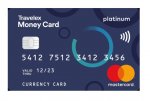
I’ve tried out a few currency cards on my adventures over the years and this one looks pretty good.
The Travelex Money Card supersedes Travelex’s Multi Currency Cash Passport card – and I think it’s much better. If you already have a Multi Currency Cash Passport, you can call Travelex and get the balance transferred to a new Travelex Money Card.
The Travelex Money Card is a prepaid card so you don’t have to worry about carrying loads of cash or putting your debit card in a foreign ATM (I stopped doing that after my card was cloned in Guatemala the moment I stepped over the border, but that’s another story).
This is what you get from the Travelex Money Card:
• Free ATM cash withdrawals (but be aware some overseas ATMs have their own fees) • Free use abroad – no foreign loading fees in shops, restaurants etc. as you load the local currency on your card • Mastercard exchange rate at loading • A smartphone app to top-up and check your balance (much better than doing it on a website) • Contactless payments • Merchant offers exclusive to Travelex • 24/7 global emergency assistance if your card is lost or stolen, including provision of emergency cash in the local currency where you are • Free wi-fi with Boingo
The free wi-fi a really cool perk for travellers as data roaming can cost a fortune if you venture out of Europe. You get three months’ Boingo membership, on up to four devices, from when you register the card or top it up. Basically, if you top it up for each trip, you get free wi-fi for each trip. You’ll need to sign up before you go and you can do this on the Travelex website: go to the Money Card page, enter your card number, then create an account to find and use Boingo hotspots. Boingo has more than 1 million hotspots around the world including numerous airports (e.g. Heathrow) so it will save you having to pay for wifi, or sit in Starbucks for hours, during long boring layovers. It also has hotspot in hotels, stadiums, shopping centres etc.
Currencies You can load the card with up to 10 different currencies. These are: GBP – British Pounds EUR – Euro USD – US Dollar AED – United Arab Emirates Dirham AUD – Australian Dollar CAD – Canadian Dollar TRY – Turkish Lira NZD – New Zealand Dollar ZAR – South African Rand CHF – Swiss Franc
WARNING: Use the card for these currencies only and make sure you have enough money in the right currency before you go spending. Otherwise there’s a nasty 5.75% foreign exchange fee.
The small print There are a couple of other things to watch out for too. Firstly, don’t load the card in GBP (why would you?) as there’s a 2% load fee. It’s free for FX (Foreign Exchange) loads though. And there are fees if you use the card in the UK – so don’t. Stick to just using it abroad. This is pretty standard stuff for prepaid FX cards – they’re designed for use abroad, not in the UK.
Also, be aware of a £2/month inactivity fee if you don’t use or top-up your card for 12 months. This won’t be a problem for regular travellers but if you go on holiday less frequently, make a diary note to add a few EUR or USD to the card each year. An additional or back-up card costs £5.
Fees:
There’s also an ATM limit of £500 each day.
If you’re not a big app fan you can also top up the card in Travelex store, on the Travelex website, on the phone or via bank transfer. The Mastercard exchange rate applies when you top up the card. It’s normally a pretty good rate and if a currency you want becomes good value you can load the card when it’s cheap and lock-in a decent rate.
In my opinion as a seasoned traveller, Prepaid FX cards are an essential for holidaymakers since the number of debit cards that offer free worldwide use slowly died a death. Metro Bank, Nationwide and Norwich & Peterborough building society all offered fee-free use abroad at some point. But Metro now charges outside Europe, and Nationwide has also started charging for overseas use. Norwich & Peterborough is in the process of shutting down all its current accounts. There are a couple of credit cards you can use fee-free abroad but I’m not a fan of getting into debt on holiday – a prepaid card is much better for budgeting. Keep your credit card for emergencies.
All comments (189)
MADMANGAMER
3 Apr 17#1
Whats FX?
discount4cash
3 Apr 17#2
there appears to be more fees than ever explain where is the most cost effective exchange is compared to Revolut card
PalG
3 Apr 17#3
Can this be used in thailand? what would be the best way to load it for that reason?
writergirl74
3 Apr 17#4
FX is shorthand for foreign exchange
siloy
3 Apr 17#5
Get a Monzo card.. you can top up from your mobile and your mother can withdraw the cash and use the card for shopping without incuring any fees... top up is dead easy and no charges for that as well. there are some limits on cash withdrawal, have a quick look before you sign up..
AlanS181824
3 Apr 17#6
I live in Éire, could I in theory use this card here with no fees given it's not the Britain?
lidds
3 Apr 17#7
Exactly this is rubbish compared with monzo. I use mine all the time I'm the UK
jackvdbuk
3 Apr 17#8
I feel the same the only thing that got my attention was the free wifi but would defo like a list of hotspots to see if its worth entertaining

![Fresh Breakfast Meat Box (Using code) @ Campbells Meat [Haggis / Lorne Sausage / Bacon / Black Pudding & More]](/images/topics/208684_1.jpg)









![[Xbox One] Q. u. b. e: Director's Cut on Deals with Gold](/images/topics/208716_1.jpg)





Opening post
The Travelex Money Card supersedes Travelex’s Multi Currency Cash Passport card – and I think it’s much better. If you already have a Multi Currency Cash Passport, you can call Travelex and get the balance transferred to a new Travelex Money Card.
Why I like it!
It’s also a serious rival to the Travelex Supercard
which was a big hit when it launched a couple of years ago and was really popular with hotukdeals members. This particular deal also has contactless payments and free wi-fi which the Supercard doesn’t offer.
The Travelex Money Card is a prepaid card so you don’t have to worry about carrying loads of cash or putting your debit card in a foreign ATM (I stopped doing that after my card was cloned in Guatemala the moment I stepped over the border, but that’s another story).
This is what you get from the Travelex Money Card:
• Free ATM cash withdrawals (but be aware some overseas ATMs have their own fees)
• Free use abroad – no foreign loading fees in shops, restaurants etc. as you load the local currency on your card
• Mastercard exchange rate at loading
• A smartphone app to top-up and check your balance (much better than doing it on a website)
• Contactless payments
• Merchant offers exclusive to Travelex
• 24/7 global emergency assistance if your card is lost or stolen, including provision of emergency cash in the local currency where you are
• Free wi-fi with Boingo
The free wi-fi a really cool perk for travellers as data roaming can cost a fortune if you venture out of Europe.
You get three months’ Boingo membership, on up to four devices, from when you register the card or top it up. Basically, if you top it up for each trip, you get free wi-fi for each trip. You’ll need to sign up before you go and you can do this on the Travelex website: go to the Money Card page, enter your card number, then create an account to find and use Boingo hotspots.
Boingo has more than 1 million hotspots around the world including numerous airports (e.g. Heathrow) so it will save you having to pay for wifi, or sit in Starbucks for hours, during long boring layovers. It also has hotspot in hotels, stadiums, shopping centres etc.
Currencies
You can load the card with up to 10 different currencies. These are:
GBP – British Pounds
EUR – Euro
USD – US Dollar
AED – United Arab Emirates Dirham
AUD – Australian Dollar
CAD – Canadian Dollar
TRY – Turkish Lira
NZD – New Zealand Dollar
ZAR – South African Rand
CHF – Swiss Franc
WARNING: Use the card for these currencies only and make sure you have enough money in the right currency before you go spending. Otherwise there’s a nasty 5.75% foreign exchange fee.
The small print
There are a couple of other things to watch out for too. Firstly, don’t load the card in GBP (why would you?) as there’s a 2% load fee. It’s free for FX (Foreign Exchange) loads though. And there are fees if you use the card in the UK – so don’t. Stick to just using it abroad. This is pretty standard stuff for prepaid FX cards – they’re designed for use abroad, not in the UK.
Also, be aware of a £2/month inactivity fee if you don’t use or top-up your card for 12 months. This won’t be a problem for regular travellers but if you go on holiday less frequently, make a diary note to add a few EUR or USD to the card each year. An additional or back-up card costs £5.
Fees:
There’s also an ATM limit of £500 each day.
If you’re not a big app fan you can also top up the card in Travelex store, on the Travelex website, on the phone or via bank transfer.
The Mastercard exchange rate applies when you top up the card. It’s normally a pretty good rate and if a currency you want becomes good value you can load the card when it’s cheap and lock-in a decent rate.
In my opinion as a seasoned traveller, Prepaid FX cards are an essential for holidaymakers since the number of debit cards that offer free worldwide use slowly died a death. Metro Bank, Nationwide and Norwich & Peterborough building society all offered fee-free use abroad at some point. But Metro now charges outside Europe, and Nationwide has also started charging for overseas use. Norwich & Peterborough is in the process of shutting down all its current accounts.
There are a couple of credit cards you can use fee-free abroad but I’m not a fan of getting into debt on holiday – a prepaid card is much better for budgeting. Keep your credit card for emergencies.
All comments (189)
there are some limits on cash withdrawal, have a quick look before you sign up..