Yes, the pound has been lower - but not since the mid 80s, and that was exceptional. The £ dropped about 10% against the $ on the day after the Brexit vote (a huge drop for 1 night), and another 10% rapidly since then, which is very unusual in such a short time.
This was the news the day after Brexit and it contains a chart of £ vs $ over the past 45 years: http://www.bbc.co.uk/news/business-36611512
As you will see, getting close to $1.20 is not just the normal expected fluctuation. 1985 is the only time we've come that low and that was short lived.
The low £ does have advantages for our exporters, but it will mean price increases. You can bury your head in the sand and pretend that Brexit hasn't impacted the value of the £ if you wish, but that flies in the face of what most credible financial experts say.
Spod
8 Nov 165#22
That's not what I said, but you obviously aren't listening. You aren't actually taking in the argument, you are just misrepresenting what I say to make your case.
There's no point in continuing this. I'm not sure if you are actively trolling or just trying to doggedly defend the hole you've dug for yourself. Either way, there's no point as you're obviously never going to admit that Brexit could have had a negative effect, despite realising that leaving the EU is an exceptional event, which is BOUND to have an effect on currency!
You are one of those people who can never admit they are wrong, but argue on, and keep digging the hole - so I may as well just add you to the ignore list and be done with it!
Spod
8 Nov 164#20
Yes, leaving Europe IS exceptional - so you are finally admitting that Brexit IS the cause then! FFS! But as you say, just believe any crap you want and give it a rest!
retrend
7 Nov 163#16
So you see no link between brexit vote, the pound dropping 20%, the price of $ imports going up approximately the same 20% ?
All comments (36)
Ruffuz
6 Nov 16#1
only 1 in stock
popoyaya
6 Nov 16#2
Can you explain what "72TB endurance rating " means?
Mechanial hard drives wear out over time since they have spinning parts. Solid state drives don't have spinning parts, but they have a limited lifespan because the flash cells within them that store data can only be written a few times. By a few I mean hundreds to thousands of times. If you take the average number of times a cell can be written and multiply that by number of cells (or capacity) you get an endurance rating. How much data can be written to the drive before too many cells fail and the entire drive needs replacing. 72TB is fairly low, for instance I've written 40TB to one of my 240GB Intel 335 SSDs and it's reporting 99% of its lifespan remaining. Those drives don't have an actual endurance rating but it's estimated to be 500TB, these drives were made in 2012 btw.
Someone's buying into the incessant "remain" propaganda that the results shouldn't be final until they get their own way, eh ? (By the way, I accidentally tapped on "like" - why's there no way to deselect it ?)
spannerzone
6 Nov 162#9
indeed, I'm pretty sure we were all complaining about food price increases several years ago......selective memory I guess :smile:
retrend
6 Nov 161#10
My comment wasn't meant to be political, it was more simply that this is a good priced SSD despite being higher than the prices 6months ago. The £ has gone down in response to Brexit, thus this is a hot price post brexit.
PhilK
6 Nov 16#11
Now I liked that post and it WASN'T accidental ! :stuck_out_tongue:
Yes, it is odd that so many have now looked at price increases as down to Brexit.
So what caused price increases before Brexit ? Tooth Fairy ? Earthquakes in Antarctica ? Or Brexit before Brexit happened ? (seriously - that was suggested by some arrogant ranting "wimmin" on TV a week or so ago on Sky news)
JC2MULTIPLAYER000
6 Nov 162#12
No. It's not odd at all. It's a pretty strong correlation between the two.

![Fresh Breakfast Meat Box (Using code) @ Campbells Meat [Haggis / Lorne Sausage / Bacon / Black Pudding & More]](/images/topics/208684_1.jpg)




































![[Xbox One] Q. u. b. e: Director's Cut on Deals with Gold](/images/topics/208716_1.jpg)


















Opening post
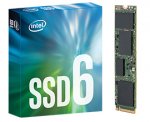
Very fast drive with the main downside being a low 72TB endurance rating for all drive sizes.
Intel have updated the Endurance for this drive series. This is now 288TBW - http://ark.intel.com/products/94924/Intel-SSD-600p-Series-512GB-M_2-80mm-PCIe-3_0-x4-3D1-TLC
- Agharta
Top comments
This was the news the day after Brexit and it contains a chart of £ vs $ over the past 45 years:
http://www.bbc.co.uk/news/business-36611512
As you will see, getting close to $1.20 is not just the normal expected fluctuation. 1985 is the only time we've come that low and that was short lived.
The low £ does have advantages for our exporters, but it will mean price increases. You can bury your head in the sand and pretend that Brexit hasn't impacted the value of the £ if you wish, but that flies in the face of what most credible financial experts say.
There's no point in continuing this. I'm not sure if you are actively trolling or just trying to doggedly defend the hole you've dug for yourself. Either way, there's no point as you're obviously never going to admit that Brexit could have had a negative effect, despite realising that leaving the EU is an exceptional event, which is BOUND to have an effect on currency!
You are one of those people who can never admit they are wrong, but argue on, and keep digging the hole - so I may as well just add you to the ignore list and be done with it!
All comments (36)
Yes, it is odd that so many have now looked at price increases as down to Brexit.
So what caused price increases before Brexit ? Tooth Fairy ? Earthquakes in Antarctica ? Or Brexit before Brexit happened ? (seriously - that was suggested by some arrogant ranting "wimmin" on TV a week or so ago on Sky news)