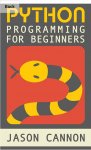
Learn Python the Easy Way, Complete with Examples and Exercises
Knowing where to start when learning a new skill can be a challenge, especially when the topic seems so vast. There can be so much information available that you can't even decide where to start. Or worse, you start down the path of learning and quickly discover too many concepts, commands, and nuances that aren't explained. This kind of experience is frustrating and leaves you with more questions than answers.
Python Programming for Beginners doesn't make any assumptions about your background or knowledge of Python or computer programming. You need no prior knowledge to benefit from this book. You will be guided step by step using a logical and systematic approach. As new concepts, commands, or jargon are encountered they are explained in plain language, making it easy for anyone to understand.
Here is what you will learn by reading Python Programming for Beginners:
When to use Python 2 and when to use Python 3. How to install Python on Windows, Mac, and Linux. Screenshots included. How to prepare your computer for programming in Python. The various ways to run a Python program on Windows, Mac, and Linux. Suggested text editors and integrated development environments to use when coding in Python. How to work with various data types including strings, lists, tuples, dictionaries, booleans, and more. What variables are and when to use them. How to perform mathematical operations using Python. How to capture input from a user. Ways to control the flow of your programs. The importance of white space in Python. How to organize your Python programs -- Learn what goes where. What modules are, when you should use them, and how to create your own. How to define and use functions. Important built-in Python functions that you'll use often. How to read from and write to files. The difference between binary and text files. Various ways of getting help and find Python documentation. Much more...
All comments (18)
maui
5 Apr 17#1
Hot! Thanks - will come in handy whilst I continue to develop my home automation stack!
gabesdad
6 Apr 17#2
Still free at the moment
OptimusPrimeval
6 Apr 17#3
Thank you.
pothole
6 Apr 17#4
Nice.
Just curious why one would need to know when to use Python 2 and when to use Python 3. It makes it sound as if they run in parallel and/or incompatible with each other.
Vomit
6 Apr 17#5
Slowly getting a library of free kindle books
Phobos
6 Apr 17#6
Mainly because there a certain libraries/functions that are only available in Python 2 and also as a Python developer you may be called upon to support legacy code created in Python 2. So knowing the differences between 2 and 3 is somewhat useful. Though generally these days most of us use Python 3.
stec77
6 Apr 17#7
do kindle books require an account that is paid for?
thetreelogger
6 Apr 17#8
useful to cop the yeezyes
Littlepaz06
6 Apr 17#9
Still Free - thanks
amour3k
7 Apr 17#10
No, they don't all require a paid for account, lol. :-)
Most of my Kindle collection are mostly via such similar freebies ...
So I can tell you for sure, that that's the way it is. :-)
Ps. The OP's Freebie Deal is still FREE!, as I just got it myself (literally a few minutes before then typing this up to you too). :-)
amour3k
7 Apr 17#11
A good point that, lol.
And where is the where to use Python 1 in all this too then?, looool. :-)
Print List Price: £16.99 Kindle Price: £1.99 Save £15.00 (88%) includes VAT*
expired now
michaelsouris
9 Apr 17#14
You will need a lot more parentheses in 3. Here, cut & paste these for free: ()()() ;-)
michaelsouris
9 Apr 17#15
Dear Python, the 1990s are calling, and they want their programming language back.
amour3k
10 Apr 17#16
?
If I'm not mistaken (though I just might?, lol), newer versions of the Windows OS are written in Visual C/Dev C, built upon/from it's older sibling of C++ (and it's much older variant) C+ upon which the original DOS OS (QDOS, MS-DOS, DRDOS, etc?), all Platforms of which both made and broke $fortunes$ for somebody?.
Where would any of the above now be also?, without their earlier fledgling counterparts to begin with?, or .....
Everything somewhere, starts with a fire in it's belly somehow?. :-)
michaelsouris
10 Apr 17#17
We could spend hours discussing the genealogy of programming languages - but I wouldn't recommend spending time learning Python any more than I would recommend spending time learning batch scripting in QDOS. Leave it to us old farts who can still make a few bob maintaining legacy systems, better to go and learn something more current like Swift and Java and make a killing writing the apps of tomorrow...
![Fresh Breakfast Meat Box (Using code) @ Campbells Meat [Haggis / Lorne Sausage / Bacon / Black Pudding & More]](/images/topics/208684_1.jpg)










![[Xbox One] Q. u. b. e: Director's Cut on Deals with Gold](/images/topics/208716_1.jpg)






Opening post
Learn Python the Easy Way, Complete with Examples and Exercises
Knowing where to start when learning a new skill can be a challenge, especially when the topic seems so vast. There can be so much information available that you can't even decide where to start. Or worse, you start down the path of learning and quickly discover too many concepts, commands, and nuances that aren't explained. This kind of experience is frustrating and leaves you with more questions than answers.
Python Programming for Beginners doesn't make any assumptions about your background or knowledge of Python or computer programming. You need no prior knowledge to benefit from this book. You will be guided step by step using a logical and systematic approach. As new concepts, commands, or jargon are encountered they are explained in plain language, making it easy for anyone to understand.
Here is what you will learn by reading Python Programming for Beginners:
When to use Python 2 and when to use Python 3.
How to install Python on Windows, Mac, and Linux. Screenshots included.
How to prepare your computer for programming in Python.
The various ways to run a Python program on Windows, Mac, and Linux.
Suggested text editors and integrated development environments to use when coding in Python.
How to work with various data types including strings, lists, tuples, dictionaries, booleans, and more.
What variables are and when to use them.
How to perform mathematical operations using Python.
How to capture input from a user.
Ways to control the flow of your programs.
The importance of white space in Python.
How to organize your Python programs -- Learn what goes where.
What modules are, when you should use them, and how to create your own.
How to define and use functions.
Important built-in Python functions that you'll use often.
How to read from and write to files.
The difference between binary and text files.
Various ways of getting help and find Python documentation.
Much more...
All comments (18)
Just curious why one would need to know when to use Python 2 and when to use Python 3. It makes it sound as if they run in parallel and/or incompatible with each other.
Most of my Kindle collection are mostly via such similar freebies ...
So I can tell you for sure, that that's the way it is. :-)
Ps.
The OP's Freebie Deal is still FREE!, as I just got it myself (literally a few minutes before then typing this up to you too). :-)
And where is the where to use Python 1 in all this too then?, looool. :-)
Kindle Price: £1.99
Save £15.00 (88%)
includes VAT*
expired now
If I'm not mistaken (though I just might?, lol), newer versions of the Windows OS are written in Visual C/Dev C, built upon/from it's older sibling of C++ (and it's much older variant) C+ upon which the original DOS OS (QDOS, MS-DOS, DRDOS, etc?), all Platforms of which both made and broke $fortunes$ for somebody?.
Where would any of the above now be also?, without their earlier fledgling counterparts to begin with?, or .....
Everything somewhere, starts with a fire in it's belly somehow?. :-)
Leave it to us old farts who can still make a few bob maintaining legacy systems, better to go and learn something more current like Swift and Java and make a killing writing the apps of tomorrow...