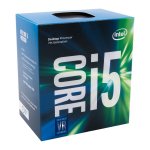
Thanks to Fat.Tony for the information as its appears to be the cheapest so far for the 7500:
Its time to bite and grab it while I can.
Looks like stock in in on the 16th of February too.
Top comments
Hasnaiin
10 Feb 1715#3
wait for ryzen
plath
10 Feb 178#5
intel crap. they're already releasing a successor to krappy lake in 2H 2017. cuz Ryzen has them scared. another rebrand with a factory overclock probably.
better to wait for ryzen than buy one of these old intel chips. a ryzen chip will probably be better value at this price.
alanbeenthere
10 Feb 173#12
Wrong i7.
Try 50% of the cost of 6900k.
Latest comments (86)
plath
17 Feb 17#86
if it's an accurate leak then builders who choose ryzen will have a better supported socket, cheaper mobos, more cores and single threaded performance similar to haswell/skylake.
alanbeenthere
17 Feb 17#85
I guess that depends on thread use.
Though the i5 system was using DDR4 ram clocked at 3600 MHz, not sure what the 1600x supports?
Yes after reading this thread, it's probably wise to wait a few weeks to save some money hopefully!
alanbeenthere
15 Feb 17#80
If you can wait until the release of AMD's new Ryzen chips, which should be early next month, then there will be some benchmarks and actual pricing available for those and advice will be easier. In turn the AMD release should cause price drops on intel chips (as long as AMD are competitive).
khaleeji
15 Feb 17#79
Hi, sorry to hijack this thread but I've been looking to purchase a new desktop pc with intel i5 . Everyone on here seems to know about so much so I was looking for some advice. I purchased a laptop last year after some very good recommendations given by HUKD members and got a bargain!
I don't want anything fancy for the desktop tower, just something for basic tasks, photo editing and that will last a good few years. I have been looking at Intel i5 4460, 8GB RAM, SSD. But the Intel processors are making the price very high and someone recommended AMD instead. What would be a good AMD equivalent processor?
I have looked at Ebuyer and a few other site for ready-built towers but they are expensive. I was hoping to get something for under £400. I have asked my local pc shop for a price to build one but that is also working out expensive so I was thinking of buying the most expensive parts myself and asking them to assemble it. Any thoughts?
welsh_andy
14 Feb 17#78
i think we have a winner.
The_Hoff
13 Feb 17#77
When MS have a partner network and millions of clients to protect it was the only option.
Intel's itanium offering was completely impractical, even today.
ARM is a completely different example. As I said there were plenty of others emulating Intel at that time (that were doing it better for cheaper) but lacked the relationships with IBM etc to make any solution stick firmly.
They've been fortunate in more ways than one.
vulcanproject
13 Feb 17#76
Wouldn't have exploded? Intel's market cap in 1980 before the IBM personal computer deal was over $1.5bn.
You do realise that the IBM contract was for Intel and that Intel could have literally chosen any second supplier they wanted? They chose AMD because they had demonstrated a decent ripoff of the 8080 already. If Intel were that evil, they could have sued the crap out of AMD for their clones, killed them off by the late 70s and gone into business with someone else. They had all the designs. The IP was entirely theirs. The contract was theirs. But they made the decision to offer AMD the second supplier contract. By the time of the IBM contract AMD's business was totally focused around being a second supplier of Intel designed parts.
AMD's early years, and their entire CPU business up until K5 in the mid 90s were all Intel designs. Without AMD cloning Intel's designs we probably would have just had someone else, what they did was nothing any other decent manufacturer could do. They just built someone else's chips.
AMD didn't want to design their own processors until Intel went to war over the AM386. AMD could have completely split from x86 and gone it alone, but they decided to cling onto Intel as long as possible. They claimed they would develop their own microcode if they lost the AM386 case, but there was nothing to stop them doing that 10-15 years before!
Other manufacturers have made their own completely distinct designs successful since then. I can point to ARM who decided not to cling onto someone else's coat tails and develop ARM architecture. ARM are now a bigger company in 2017 than AMD are.
Itanium and IA-64 was a failure for one reason only, and that is Microsoft. Microsoft just didn't want to create and support a separate 64 bit environment, even if it would have been beneficial for many consumers. As a result you waited about 8 years after IA-64 arrived to get a viable stable 64 bit platform in your home with Windows 7. 64 bit software and extensions to today aren't as widely used as it could have been mainly because 32 bit backwards compatibility caused everyone to slack off and fall back on it. There was no 64 bit revolution in the end. Yeah woo, good one AMD/Microsoft.
AMD were the cheap option for Microsoft, which is often very distinct from the best option.
The_Hoff
12 Feb 17#75
AMD owe their early beginnings to Intel, but without AMD Intel would never have exploded in top PC's as they did due to a lack of manufacturing facilities, AMD sourced chips in IBM computers were essentially the beginning of their empire. AMD may have reverse engineered their designs (why reinvent the wheel?) like many other companies at the time, Cyrix, VIA, NEC et al but in that process improved their products and at a reduced cost.
Without AMD being relevant we'd all still be being drip fed ridiculous priced computers for no good reason other than blatant profiteering and you cannot argue that. They've been shafting you just like they've been shafting schools and businesses all this time, it seems you just enjoyed it more than the rest of us.
You also completely misunderstand the x64 scenario. AMD created the x86_x64 extensions which retained the much needed backwards compatibility of SOFTWARE running on x64 platforms. Itanium would have completely severed that x86 compatibility in all respects and was never going to succeed - thank god. AMD cross license x86 from Intel, Intel license x64 from AMD though actually they cross license ALL of their IP with specified condition. But to your point, the x64 battle was not of a platform revolution, it was lost because of software and application compatibility, in which case MS were always going to back the best option... which was AMD.
Nothing to thank AMD for of course, not affordable computing.
vulcanproject
12 Feb 17#74
They gave permission. Intel cross licensed x86 long before the AM386, as I said in my history lesson. In 1976 and extended in 1982.
You merely bypassed 15 years of the story straight to the AM386 in the 90s with some nice copy pasting there and no context. Good job. Neglecting to acknowledge AMD's entire microprocessor division and their entire company today was built on Intel's intellectual properties.
AM386 was controversial, because AMD took it upon themselves to just clone another entirely owned Intel intellectual property and said that it counted under the agreement made 10 years prior. The court case only partially agreed that it adhered to the spirit of the cross license, but AMD made concessions to Intel's demands in a renewal of the agreement because obviously AMD would be dead as a company if Intel had wished it to be the case.
Intel just wanted AMD to not build it's business around ripping off Intel designs. Fair enough, can't blame Intel for it. AMD's very own designs only exist because of the AM386 debacle. Another reason to thank Intel
You owe everything right now to Intel and x86 in personal computing. AMD in turn owe everything right now to Intel.
Also without AMD's x64 extensions but specifically Microsoft's backing then we would probably have had native 64 bit take up across all machines many years before we finally did. Because that was what Intel were trying to accomplish, a revolution. Microsoft did not want to support a 64bit consumer OS and create one at this stage. In then end market forces settled on an evolution and as a result it was another 5 years before anyone got a 64 bit Windows machine in their home (XP64) and longer to be widespread.
The fact remains they only exist because intel allowed them to use x86 in the first place. Intel allowed them to continue and agreed to take them up instead of IA-64 when they could have flooded the market with their alternative and killed AMD's competition. But they agreed not to go to war as all three companies would have lost.
AMD and Microsoft then did an excellent job of slowing down 64 bit consumer take up, congrats to them. But at least if you had a massive database and needed the server memory to run it in the early 2000s Intel's Itanium provided for it.
Intel's contributions to modern computing outweigh AMD's like an elephant on the scales with a mouse TBH. Please don't pretend or say otherwise.
CeeJayCee
12 Feb 17#73
Ordered this last week, being delivered tomorrow.
Uncommon.Sense
12 Feb 17#72
With regards to CPU's and efficiency I'd say it's a lot harder to lie, unless you are Intel of course when you decide that TDP is not forgiving enough so they moved to SDP for certain SKU's.
As for the competition to this chip, given the newly leaked pricing from today the R3 1100 and the R3 1400X both would seem direct competitors, and as a significantly lower price.
tahir_owen
12 Feb 171#71
TBH when it comes to AMD and efficiency, I would take their claims with a dash of paprika. Look at Polaris, it's no where as efficient as Pascal... they weren't quite lieing buy were stretching the truth quite a bit.
This does look to be a masive shakeup in the market though. Good for both AMD and Intel fanboi's alike.
taras
12 Feb 17#70
probably the cheapest 6c/12t will be. My Q: will the r3 or r5 4 cores run alot cooler than 65w?
taras
12 Feb 171#69
Yup both are now using each other's ip. That said i believe from memory that amd created their cpu in a "clean house" situation (ie did not copy intel).
tahir_owen
12 Feb 17#68
looks like the R51300 4/8 (3.3-36Ghz) or even the R5 1400X (3.5-3.9Ghz) will be around this price
Uncommon.Sense
12 Feb 172#67
Lest not forget that AMD are now also responsible for pretty much all modern Intel CPU's, since they adopted x86-64 from AMD rather than trying to keep their IA-64 dreams alive. :smiley:
The_Hoff
12 Feb 17#66
They never gave permission, they were ordered to by the courts:
While the AM386 CPU was essentially ready to be released prior to 1991, Intel kept it tied up in court.[2] AMD had previously been a second-source manufacturer of Intel's Intel 8086, Intel 80186 and Intel 80286 designs, and AMD's interpretation of the contract, made up in 1982, was that it covered all derivatives of them. Intel, however, claimed that the contract only covered the 80286 and prior processors and forbade AMD the right to manufacture 80386 CPUs in 1987. After a few years in the courtrooms, AMD finally won the case and the right to sell their Am386 in 1992. This also paved the way for competition in the 80386-compatible 32-bit CPU market and so lowered the cost of owning a PC.[1]
While Intel's 386 design peaked at 33 MHz, AMD released a 40 MHz version of both its 386DX and 386SX, extending the lifespan of the architecture. The AMD 386DX-40 was popular with small manufacturers of PC clones and with budget-minded computer enthusiasts because it offered near-80486 performance at a much lower price than a real 486.
Intel wanted to maintain control of the marketplace and keep prices high. AMD lowered the prices for everyone. Good old Intel.
If we had it Intel's way we'd all be driving around in Mercedes taking paracetamol from a single manufacturer; any market free of competition is toxic. We owe nothing to Intel, they had their monopoly.
More so, you owe gratitude to AMD for making computers accessible to everybody and driving industry and the world forward. Intel would still have us all on Pentium chips if it had its way.
Intel invented the commercial microprocessor. They invented x86. AMD's first ever microprocessor was a straight up copy of an Intel 8080 that Intel let slide. AMD's biggest early contract through the 80s was as a second supplier of entirely Intel designed chips to IBM. Right up to the 90s AMD still suckled at Intel's teat, the AM386 was AMD's big success and guess what? It too was merely a clone of an Intel design from 5 years prior.
Intel's designs powered the planet. It was once said (and probably true) that there is nowhere an Intel 8080 design hasn't been, they are that ubiquitous :stuck_out_tongue:
AMD literally owe their entire existence today to Intel agreeing they would cross license x86 to them. Their bread and butter for nearly 20 years was manufacturing/copying Intel parts.
Intel are surely no saints, and AMD competition is very very welcome and necessary. It'll be superb.
But the mind boggles when I see people say Intel haven't paid the consumer, businesses, or the world any favours! So have a history lesson on me.
pauleden
11 Feb 17#64
The Amazon description is a little misleading. 3.8 is this chip's turbo speed - it'll rarely go that fast and it won't sustain that speed. It's really a 3.4GHz chip.
fat.tony
11 Feb 171#63
Also got it from flubit at £167.50.
The_Hoff
11 Feb 17#62
Oh and if anybody wants to buy a 4770k let me know :smiley:
The_Hoff
11 Feb 171#61
My last AMD CPU was an Athlon 64 that was OCed using the HB pencil technique... lol.
From that point, I've been sick of the Intel domination that we've all had to suffer.
They're a business and not a charity, I get that. But none of their work has been in the interests of the consumer, or businesses.
It's no accident they released their Pentium chip and have announced another Kl refresh, businesses will love this (I think not), as will Apple given their new Macbook range just took a hit with the announcement.
The sooner AMD enter the market the sooner we get some greater honesty.
If I never have to use an Intel chip in my personal life or as a business customer for the next decade I'll happily avoid them for the lack of favours they've paid us.
RE iGPU it will be interesting to see if we get AMD GPU on Intel chips as has been rumoured.
darthvader666uk
11 Feb 17#60
Im in the process of a new build too hence why I saw this deal. I really want AMD to come back with some good stuff and , as you said, shift the market and hopefully some good competition happens between the both where all of us win :smiley: I used to be an AMD fanboy up until the amd Phenom 2 and that was it for me, AMD just slumped and I had to jump to Intel because of the domincnce.
Though being without a PC for 2 weeks, I dont know how long I can hold out without getting my gaming addiction under control. Going cold turkey is hard :smiley:
vulcanproject
11 Feb 17#59
It's not really £200 though is it? This deal was for £185, but as has been pointed out here you can get it on flubit for £168.
The key to the mainstream parts over whether you buy it for gaming or not comes down to the integrated GPU. AMD's parts may represent better value for gamers and only gamers, but Intel's parts will likely still be better for the largest percentage of the desktop PC market. Gaming is a small share of the overall market even today, which you really need to remember.
Intel will respond and they have a 6 core mainstream part on their road map for the first time. This is obviously a good thing. Competition. The fact that they aren't rushing to dish out a whole raft of mainstream 6 core parts this year though suggests to me they are fairly happy they have AMD's number still in single threaded performance, and the mainstream market.
The_Hoff
11 Feb 17#58
Wasn't necessarily aimed at you. If you're part way invested that makes sense, you just obviously weren't aware of the market when you bought back in.
The chips are released in beginning of March, so 3 weeks.
If nothing more these chips will be discounted as interest starts to shift.
I really don't get this whole Intel "white knight" opinion though. They've been absolutely SHAFTING gamers and enterprise for the last decade, we've needed change and this is it.
We all profit.
Gkains
11 Feb 17#57
Yes, the switchable stuff which laptops have really should have made it's way to desktops ages ago.
But of course it requires proper vendor support and although there are only three possible vendors, there are four possible combinations: Intel + Nvidia, Intel + AMD, AMD + Nvidia, and AMD + AMD.
Only the last one would be possible without co-operation and unfortunately AMD have the smallest R&D budget.
The ZeroCore power feature which AMD introduced with the original GCN was a step in the right direction, but it only worked for CrossFire and was not been enhanced in 5 years.
taras
11 Feb 17#56
The ideal situation would be x amount of fast cores, and x amount of low powered ones so like zen plus bobcat cores which could switch when you have little running, thus going into near quite mode. Even though the zen cores can go into lower power anyway
Unfortunately windows can't support that.
A windows doze mode would be great as leaving the machine one would mean 5w or 10w which would be amazing. The other thing i'd like to see is routable video ports as well, ie that your vidoecard output its routed to an independent port which served both the gpu and igpu :smiley: so you could power off the video card :smiley: = silence :smile:
Uncommon.Sense
11 Feb 17#55
You've got to agree at almost £200 for a 4c/4t CPU this is starting to move away from mainstream also? If Intel continue the way they have been for the last couple of iterations then they will become another Nvidia.
Should AMD product a solid 6c/12t part with decent frequency at circa £200 then Intel will really struggle to answer other than reducing the costs, or pulling forward the next release ASAP.
vulcanproject
11 Feb 17#54
AMD love a bait and switch for TDP numbers.
So no, not 150w in the benchmarks. You'll probably only ever pull down very close to 140w on a 6800k if you use artificial stress test software. System power management is far more complex than reading the TDP of something. If you need to think about what TDP really means for overall system power consumption then go and see if AMD's 95w rated chips from the past 7/8 years genuinely use the same amount of power when loaded against most of Intel's 95w rated chips in a running system :stuck_out_tongue:
My post wasn't about numbers seen on a demo controlled by AMD. This was an engineering sample run by someone else.
If AMD do ok and produce something competitive at an IPC level that would be very good for the higher end market, but we're still talking about the cheapest 8 core coming out from what I have seen of price leaks the best part of £350-£400 in the UK at retail.
Which is about right considering that only on massively threaded tasks it is likely to beat Intel's 6 cores like the £400 6800k. It'll probably be cheaper platform than Socket R, but a £300+ CPU is not really a mainstream priced part whichever way you view it. The demand for a consumer 16 thread which is only faster with 16 threads loaded won't be enormous like it isn't enormous for 12T 6800k already. Most people will do better with just a higher clocked quad.
fat.tony
11 Feb 171#53
I don't want to wait any longer, if I wait xx months there will be something due soon after that!
Plus, as I said I have purchased the motherboard and other components. Just need a PSU and I'm ready to start building next weekend ...
Just wait... It will be worth your while. Ridiculous spec at 65TDP!
fat.tony
11 Feb 17#51
I'm not really bothered at all. I already have bought most of the parts to build my ITX PC and this is after having waited a few months already and I'm not waiting for the 'next better thing' any more.
I'm all for AMD competition to Intel to drive down prices for all/you in the future, but as at yesterday this was a good enough deal for me, given my circumstances!
Gkains
11 Feb 17#50
150W? Because i7-6800K is a 140W part: https://ark.intel.com/products/94189/Intel-Core-i7-6800K-Processor-15M-Cache-up-to-3_60-GHz.
Anyway, current rumours seem to indicate that since the demo AMD have spent most of their effort on optimising the clockspeed both base and turbo. Also didn't some of the demos not have any turbo? So that would make a huge difference.
Of course, for most people if Ryzen's IPC reaches Haswell it is good enough, but others are willing to pay a lot more for 5-10% more single-threaded if some gaming benchmark shows any difference. Such difference would probably only show at 768P or a similar CPU bound scenario, or multiplayer online which seems to almost impossible to benchmark. However, one of the biggest online blasts is BF1 and that scales well to cores. Ryzen's dual-channel memory will mean far cheaper motherboards than Intel LGA2011 but unknown ATM is if anything will notice aside from archiving. About the only current game known to like memory bandwidth is Fallout4.
jomay
11 Feb 17#49
I didn't say AMD's architecture was wrong - it sounds very exciting to me, particularly if they can compete on single core performance. I simply doubt many people will use more than 4C or even 2C. And that also limits the price and market for an 8C CPU. I'd probably buy a 4C or max 6C RyZen, as anything else seems like a waste.
How often do you encode 4k videos? I only did full-HD and that works almost realtime in very good quality. If I ever did 4k then I could simply leave my PC on a few hours longer or over night. That's fine for home videos. I'm certainly not going to rip blu-rays; buying them would be cheaper. ffmpeg can also use the iGPU for blazingly fast encode, but iirc the quality isn't as good as cpu-encode.
That said, 8C or ideally 16+C are very interesting for the server market, particularly if they can also compete regarding performance per Watt and reliability! Edit: ...and that's where a LOT of money is made! Let's hope AMD gets a share of this.
Yaradabbadoo
11 Feb 17#48
It will be better if you need 8 cores!
7700K is only 4 cores so 8 is better, if you can use them ie not games.
£100 for double the cores is an amazing deal.
Gkains
11 Feb 17#47
I agree and was going to say something similar about Ryzen 8C/16T or 6C/12T but my point to BigP50000 was that those Xeon at those prices are not good for gaming. An LGA2011 with 6C/12T or 8C/16T can make sense for gaming even if Broadwell-E has a small IPC deficit vs Skylake/Kabylake, but those Xeon's which Intel sells for $5000+ are meant for multi-CPU boards (a feature Intel removed from their other boards a long time ago - I remember some relatively cheap P3 boards which could take two CPUs), and don't make sense for things which are not well threaded as their fairly low clockspeed hampers them for games and most desktop apps.
There are the occasional person who says that their FX-8350 etc. - while certainly being slower overall than their i7 system - can feel more responsive and most of that must be because it's able to run 8 integer threads without context switching or sharing (non-FPU) resources whereas the 4C/8T i7 even with HT has to juggle more stuff. Nobody ever found any benchmarks to support these claims but it is plausible.
Uncommon.Sense
11 Feb 17#46
This would seem to be indicative of things to come, and by that I mean Intel dropping prices. I'd say unless you 'have' to have one right now then wait until March (assuming it's for a new build) to see how the AMD parts compare with actual real benchmarks and pricing available.
On a side note, it will be interesting to see just how low some of the processor will go, as once you start getting down low enough you start encroaching into the other models i3/Pentium pricing and that just muddies things terribly. :smiley:
*Sloman*
11 Feb 17#45
vulcanproject
11 Feb 171#44
Mainly because for the vast vast majority of desktop users anything more than 4 cores 8 threads is not very useful. For power users it certainly is, but the benefits are minimal for even fairly serious gamers. A 4C/8T 6700k for example still comfortably duffed up a 6C/12T 5820k in the majority of games I saw tested just last year.
IPC and performance per core are just more important and more useful to more people in the software currently commonly used.
This is why Piledriver to this day is a failed architecture. AMD initially offered better multi threaded performance at several tiers, but then when everyone realised that 90 percent of their tasks were still single or dual threaded they would be better off with a dual core Intel chip than much anything AMD were offering.
The point about integrated GPU space is also a major one. You cannot get a mainstream Intel chip without one. They are enormous on the die. 1/3 of the entire die is just the GPU logic on Kaby Lake quad cores. I can see Intel launching parts without them once more.
The_Hoff
11 Feb 17#43
AMD will have spent millions of $ on R&D, I'd be reasonably happy to bet their architecture is correct this time.
If you've ever tried to encode 4k video you'll know full well the stress that places on every core.
jomay
11 Feb 171#42
I'm not arguing against AM4, I'm just trying to point out that there might be a reason why Intel hasn't explored >4-core yet for normal desktop users. I believe there simply isn't much need for it and Intel can keep server (6-24core?) and desktop markets separate. That said, I'm very happy AMD is in the game again!
Apparently Intel prefers to spend die area on a bigger integrated GPU. It seems the iGPU already takes up about half the die area for Kaby Lake. In theory Intel could build an 8-core (without iGPU) for the same price.
Powerdirector is video encode. Are you sure it won't benefit hugely from the iGPU already?
Games... hmm, I'm not convinced games will utilise 8-cores going forward. The GPU will do most of the 3D stuff (and bottleneck). That leaves AI, UI, network comm and maybe some adaptive 3D stuff for the CPU?
vulcanproject
11 Feb 17#41
The actual benchmarks of an engineering sample 8 core 16 thread Ryzen @ 3.15ghz/3.4ghz boost showed it slightly losing to a 4 core 4 thread Core i5 6600 on average across 7 game tests.
It beat a 6 core 12 thread 3.6ghz 6800k in about 8 multi threaded tests but only by about 10 percent. It's 200mhz down at boost but this is despite have two extra cores and four extra threads to work with. It also used 10 watts more than the 6800k while doing that.
Which would suggest that single threaded performance of Ryzen is somewhat mediocre against Skylake, and AMD are using similar tactics as Piledriver by having more threads and betting on massively multi threaded application performance to drive sales.
Ryzen won't be blowing away Intel. But it should drive down prices of the highest end Intel parts. As for this chip here, if you need a 6 core Ryzen @ like 3.6ghz+ to comprehensively beat it as it appear to likely be the case then chances are it won't reduce the i5 prices too much.
tahir_owen
11 Feb 171#40
Dear hduk'ers. We're all here because we have something in common. We're a bunch if tight asses :wink:
£185 for this Skylake cpu is far too much for what it is. if you're not going to do to many intensive activities like video encoding, then something like the G4560 for £60 odd quid should do you fine. Save yourself 125 notes.
Sometimes we have an itch to scratch, and however illogical that decision is, we gotz to have it! Latest iphone.. har har.
Now if you were going to buy a i7 4770 for around this amount, I could understand it much more.
Wouldn't you much rather have a G4560 with a 1050ti or just a i5 7500 for similarish monies?.
The_Hoff
11 Feb 17#39
Most DX12 games, Star Citizen and PowerDirector are my primary culprits.
If you can achieve all of this and (bare in mind that multi threading will become more and more commonplace) use less power doing so, why wouldn't you? You also can Of your processor to extract a little more life from it to boot.
Of course everyone has their own use case but for a power user or PC enthusiast for me (pending some benchmarks) AM4 is almost certainly my next build.
The_Hoff
10 Feb 171#25
People keep seemingly overlooking the fact RyZen gets you double the cores and double the threads. Any application that makes good use of HT will benefit massively.
Buying Intel ahead of the launch is madness.
GAVINLEWISHUKD to The_Hoff
10 Feb 17#35
No double the cores and four times the threads over this i5. If you use heavily threaded programs the extra £95 for the R7 1700 is likely to be money well spent.
Pricing and performance for the 4 core 8 thread models will be where it's won or lost.
jomay to The_Hoff
10 Feb 17#38
Waiting probably makes sense as prices will drop.
But which application you run on a desktop makes good use of 8 cores or more - other than the occasional video encode/transcode? Of course I'd like to have 8 cores or 16, or 128, but I seriously doubt I'd put any load on more than 2-4 cores regularly.
The_Hoff
10 Feb 17#37
Yeah sorry for confusion.
I was talking about the i7/R7 comparisons as people appear to be misunderstanding the proposition.
The Ryzen chips also being unlocked and with low TDP should OC very well.
I'm expecting even the R5 line to hit all but the very top Intel chips hard.
TypicalAsianFindingDeals
10 Feb 172#36
Wait, this is the locked non-K i5 and it's £185.99?!
I know Intel are expensive but this is insane. I got my i5 4670k for £150 at the time. Ridiculous.
fat.tony
10 Feb 171#22
I've ordered!
hatton420 to fat.tony
10 Feb 17#34
Be prepared to cry next few weeks when you see the Ryzen benchmarks and price.
hatton420
10 Feb 17#33
More like18 months and most likely more than expensive Ryzen.
hatton420
10 Feb 17#32
Ryzen is out in a few weeks so unless you're committed to intel build then seriously wait a few weeks to build.
taras
10 Feb 17#31
Intel has no answer to ryzen .. they could reduce the 10core i7 and or produce a 12 core version. but a 12 core version would be at least a year away
taras
10 Feb 17#30
I personally would hold off building a new box till the ryzen benchmarks are out.
taras
10 Feb 17#29
You do actually need more cores than your fave game needs as it keeps the system responsive. so if your fav game needs quad core - go for a 6core. Just remember the os needs space to compute too .
taras
10 Feb 17#28
less than 3 weeks to go.
alanbeenthere
10 Feb 171#27
You could buy a new processor? I'd wait for Ryzen though.
:smiley:
Hasnaiin
10 Feb 1715#3
wait for ryzen
r3dhotukdeals to Hasnaiin
10 Feb 17#26
If I had a £1 every time I heard this...
MBeeching
10 Feb 17#24
Scared? More like unchallenged. I would love Ryzen to shake up the market and get things moving again, but behind closed doors Intel will have an answer to anything AMD decides to throw at them. Bring on the benchmarks :smiley:
darthvader666uk
10 Feb 171#23
Just used Flubit as recommend by ellisfarley and got it for £165.15:
Themadcow
10 Feb 17#21
Its not the height that's the problem - the geniuses at Asrock decided to put transistors too close to the CPU slot on the mobo - so wider cooling fans can't sit properly on top. I've ended up having to use the stock fan :/
I can't see that the 7500 really needs anything more than the stock fan, but if I upgrade to a 7600k at any point then I'll have to find an alternative.
Themadcow
10 Feb 17#19
Has been around this price for a while - I ordered one for the PC build I finished last night. Reason I went for the 7500 was that I'm running a very small ITX build (albeit with a GTX 1070) and I really don't want to kick out a lot of heat in a small case. That's even more important now that I've found out that my AR06 CPU cooler doesn't fit on my Asrock motherboard.
BigP50000 to Themadcow
10 Feb 17#20
cooler doesnt fit? damn and thats only 92mm lol i was just about to say use a Scythe Big Shuriken 2 CPU cooler but that one is even more a 120mm
ellisfarley
10 Feb 171#18
Got this with 11% with Flubit
Gkains
10 Feb 171#17
Haswell-E 16C/32T running at 2.4GHz and costing $3,326 is a very very poor investment for gaming. Most game would have 1-8 cores loaded, 15-16 cores idle, and be crying out for higher frequencies with such a processor.
I mean those Xeons are great processors for some (very few) loads, but like the Zen server chip with 32 cores, or a POWER8 CPU with 12C/96T they are not very useful for must users.
Gkains
10 Feb 17#16
Really?
Guess some people have money to burn and too little sense then (most expensive = best?), or are ill-informed.
Anyway, current max Xeon core count is 28 plus HT (28C/56T). That's the Xeon Platinum 8180 for which I can't find the price, but the 24C/48T Xeon E7-8894 v4 lists at $8,898. I'm sure there are workloads where this might be justified, but gaming is not one of them as the base speed of the latter is 2.4GHz with a turbo of 3.4GHz. Since these expensive CPUs only make sense if you have well-threaded workload, or more likely a large number of hungry VMs in a server, they most likely seldom hit their turbo speed.
So for most games (even something heavily optimised for the current consoles and able to scale to 8 threads), most of the time you'd have the majority of the CPU sitting idle.
Plus Intel have Xeon processors which are pricey but wow 12 cores of extreme performance right there...not only for servers but most game enthusiasts use it to for high end gaming
andrewdb to BigP50000
10 Feb 17#13
... which xeons do they use?
alanbeenthere
10 Feb 173#12
Wrong i7.
Try 50% of the cost of 6900k.
darthvader666uk
10 Feb 171#10
Spot on Sir :smiley:
plath
10 Feb 171#9
we don't know which AMD chips will be equivalent to which intel's chips.
AMD compare the highest end ryzen chips with the broadwell e i7 6900k which is around £1k. but who knows until they've been released and benchmarked independently.
we don't know the pricing of all the SKUs. we don't really know anything at this point, except that intel are scared.
BigP50000
10 Feb 172#8
my point is
"In the UK we have a screenshot of a listing of Ryzen CPUs from trade seller Ingram Micro. These listed processors seem to have been taken down, but luckily VideoCardz took a snap. You can see the top end 4GHz AMD Ryzen 7 1800X was listed at GBP £365, the Ryzen 7 1700X at £283, and the Ryzen 7 1700 at £235. These are ex-VAT prices so you have to add 20 per cent, unfortunately. That makes the AMD Ryzen 7 1800X £438 by my calculations. In the listings WOF seems to mean 'without fan'.
you going to be spending £438 on their fastest processor (if the price is right when it finally releases) against an i7 7700k which is selling for £339.21? really?
plath
10 Feb 17#7
what's your point?
plath
10 Feb 178#5
intel crap. they're already releasing a successor to krappy lake in 2H 2017. cuz Ryzen has them scared. another rebrand with a factory overclock probably.
better to wait for ryzen than buy one of these old intel chips. a ryzen chip will probably be better value at this price.
well i love my i5's, got a i5 760,2400s,2400,3570 and 4570...i also wanted a E5-2609 V2 but thought nah i have enough processors even a fx 6300 and a 8320 ...too much time spending money on cpu's but not enough time putting them to good use.
BigP50000
10 Feb 171#1
heat added, this is a very good price for me to start planning a build. i will definitely pre-order this if i dont find any cheaper elsewhere
darthvader666uk to BigP50000
10 Feb 171#2
Im in a process of a build ATM and been looking at this as I dont really plan to Overclock. Its the cheapest I have seen so far :smiley:

![Fresh Breakfast Meat Box (Using code) @ Campbells Meat [Haggis / Lorne Sausage / Bacon / Black Pudding & More]](/images/topics/208684_1.jpg)



































![[Xbox One] Q. u. b. e: Director's Cut on Deals with Gold](/images/topics/208716_1.jpg)


















Opening post
Its time to bite and grab it while I can.
Looks like stock in in on the 16th of February too.
Top comments
better to wait for ryzen than buy one of these old intel chips. a ryzen chip will probably be better value at this price.
Try 50% of the cost of 6900k.
Latest comments (86)
Though the i5 system was using DDR4 ram clocked at 3600 MHz, not sure what the 1600x supports?
rip poor value intel builds featuring chips like the OP's.
http://wccftech.com/amd-ryzen-7-1800x-1700x-1700/
I don't want anything fancy for the desktop tower, just something for basic tasks, photo editing and that will last a good few years. I have been looking at Intel i5 4460, 8GB RAM, SSD. But the Intel processors are making the price very high and someone recommended AMD instead. What would be a good AMD equivalent processor?
I have looked at Ebuyer and a few other site for ready-built towers but they are expensive. I was hoping to get something for under £400. I have asked my local pc shop for a price to build one but that is also working out expensive so I was thinking of buying the most expensive parts myself and asking them to assemble it. Any thoughts?
Intel's itanium offering was completely impractical, even today.
ARM is a completely different example. As I said there were plenty of others emulating Intel at that time (that were doing it better for cheaper) but lacked the relationships with IBM etc to make any solution stick firmly.
They've been fortunate in more ways than one.
You do realise that the IBM contract was for Intel and that Intel could have literally chosen any second supplier they wanted? They chose AMD because they had demonstrated a decent ripoff of the 8080 already. If Intel were that evil, they could have sued the crap out of AMD for their clones, killed them off by the late 70s and gone into business with someone else. They had all the designs. The IP was entirely theirs. The contract was theirs. But they made the decision to offer AMD the second supplier contract. By the time of the IBM contract AMD's business was totally focused around being a second supplier of Intel designed parts.
AMD's early years, and their entire CPU business up until K5 in the mid 90s were all Intel designs. Without AMD cloning Intel's designs we probably would have just had someone else, what they did was nothing any other decent manufacturer could do. They just built someone else's chips.
AMD didn't want to design their own processors until Intel went to war over the AM386. AMD could have completely split from x86 and gone it alone, but they decided to cling onto Intel as long as possible. They claimed they would develop their own microcode if they lost the AM386 case, but there was nothing to stop them doing that 10-15 years before!
Other manufacturers have made their own completely distinct designs successful since then. I can point to ARM who decided not to cling onto someone else's coat tails and develop ARM architecture. ARM are now a bigger company in 2017 than AMD are.
Itanium and IA-64 was a failure for one reason only, and that is Microsoft. Microsoft just didn't want to create and support a separate 64 bit environment, even if it would have been beneficial for many consumers. As a result you waited about 8 years after IA-64 arrived to get a viable stable 64 bit platform in your home with Windows 7. 64 bit software and extensions to today aren't as widely used as it could have been mainly because 32 bit backwards compatibility caused everyone to slack off and fall back on it. There was no 64 bit revolution in the end. Yeah woo, good one AMD/Microsoft.
AMD were the cheap option for Microsoft, which is often very distinct from the best option.
Without AMD being relevant we'd all still be being drip fed ridiculous priced computers for no good reason other than blatant profiteering and you cannot argue that. They've been shafting you just like they've been shafting schools and businesses all this time, it seems you just enjoyed it more than the rest of us.
You also completely misunderstand the x64 scenario. AMD created the x86_x64 extensions which retained the much needed backwards compatibility of SOFTWARE running on x64 platforms. Itanium would have completely severed that x86 compatibility in all respects and was never going to succeed - thank god. AMD cross license x86 from Intel, Intel license x64 from AMD though actually they cross license ALL of their IP with specified condition. But to your point, the x64 battle was not of a platform revolution, it was lost because of software and application compatibility, in which case MS were always going to back the best option... which was AMD.
Nothing to thank AMD for of course, not affordable computing.
You merely bypassed 15 years of the story straight to the AM386 in the 90s with some nice copy pasting there and no context. Good job. Neglecting to acknowledge AMD's entire microprocessor division and their entire company today was built on Intel's intellectual properties.
AM386 was controversial, because AMD took it upon themselves to just clone another entirely owned Intel intellectual property and said that it counted under the agreement made 10 years prior. The court case only partially agreed that it adhered to the spirit of the cross license, but AMD made concessions to Intel's demands in a renewal of the agreement because obviously AMD would be dead as a company if Intel had wished it to be the case.
Intel just wanted AMD to not build it's business around ripping off Intel designs. Fair enough, can't blame Intel for it. AMD's very own designs only exist because of the AM386 debacle. Another reason to thank Intel
You owe everything right now to Intel and x86 in personal computing. AMD in turn owe everything right now to Intel.
Also without AMD's x64 extensions but specifically Microsoft's backing then we would probably have had native 64 bit take up across all machines many years before we finally did. Because that was what Intel were trying to accomplish, a revolution. Microsoft did not want to support a 64bit consumer OS and create one at this stage. In then end market forces settled on an evolution and as a result it was another 5 years before anyone got a 64 bit Windows machine in their home (XP64) and longer to be widespread.
The fact remains they only exist because intel allowed them to use x86 in the first place. Intel allowed them to continue and agreed to take them up instead of IA-64 when they could have flooded the market with their alternative and killed AMD's competition. But they agreed not to go to war as all three companies would have lost.
AMD and Microsoft then did an excellent job of slowing down 64 bit consumer take up, congrats to them. But at least if you had a massive database and needed the server memory to run it in the early 2000s Intel's Itanium provided for it.
Intel's contributions to modern computing outweigh AMD's like an elephant on the scales with a mouse TBH. Please don't pretend or say otherwise.
As for the competition to this chip, given the newly leaked pricing from today the R3 1100 and the R3 1400X both would seem direct competitors, and as a significantly lower price.
This does look to be a masive shakeup in the market though. Good for both AMD and Intel fanboi's alike.
While the AM386 CPU was essentially ready to be released prior to 1991, Intel kept it tied up in court.[2] AMD had previously been a second-source manufacturer of Intel's Intel 8086, Intel 80186 and Intel 80286 designs, and AMD's interpretation of the contract, made up in 1982, was that it covered all derivatives of them. Intel, however, claimed that the contract only covered the 80286 and prior processors and forbade AMD the right to manufacture 80386 CPUs in 1987. After a few years in the courtrooms, AMD finally won the case and the right to sell their Am386 in 1992. This also paved the way for competition in the 80386-compatible 32-bit CPU market and so lowered the cost of owning a PC.[1]
While Intel's 386 design peaked at 33 MHz, AMD released a 40 MHz version of both its 386DX and 386SX, extending the lifespan of the architecture. The AMD 386DX-40 was popular with small manufacturers of PC clones and with budget-minded computer enthusiasts because it offered near-80486 performance at a much lower price than a real 486.
Intel wanted to maintain control of the marketplace and keep prices high. AMD lowered the prices for everyone. Good old Intel.
If we had it Intel's way we'd all be driving around in Mercedes taking paracetamol from a single manufacturer; any market free of competition is toxic. We owe nothing to Intel, they had their monopoly.
More so, you owe gratitude to AMD for making computers accessible to everybody and driving industry and the world forward. Intel would still have us all on Pentium chips if it had its way.
http://www.mercurynews.com/2014/07/24/1995-intel-amd-end-war/
Intel's designs powered the planet. It was once said (and probably true) that there is nowhere an Intel 8080 design hasn't been, they are that ubiquitous :stuck_out_tongue:
AMD literally owe their entire existence today to Intel agreeing they would cross license x86 to them. Their bread and butter for nearly 20 years was manufacturing/copying Intel parts.
Intel are surely no saints, and AMD competition is very very welcome and necessary. It'll be superb.
But the mind boggles when I see people say Intel haven't paid the consumer, businesses, or the world any favours! So have a history lesson on me.
From that point, I've been sick of the Intel domination that we've all had to suffer.
They're a business and not a charity, I get that. But none of their work has been in the interests of the consumer, or businesses.
It's no accident they released their Pentium chip and have announced another Kl refresh, businesses will love this (I think not), as will Apple given their new Macbook range just took a hit with the announcement.
The sooner AMD enter the market the sooner we get some greater honesty.
If I never have to use an Intel chip in my personal life or as a business customer for the next decade I'll happily avoid them for the lack of favours they've paid us.
RE iGPU it will be interesting to see if we get AMD GPU on Intel chips as has been rumoured.
Though being without a PC for 2 weeks, I dont know how long I can hold out without getting my gaming addiction under control. Going cold turkey is hard :smiley:
The key to the mainstream parts over whether you buy it for gaming or not comes down to the integrated GPU. AMD's parts may represent better value for gamers and only gamers, but Intel's parts will likely still be better for the largest percentage of the desktop PC market. Gaming is a small share of the overall market even today, which you really need to remember.
Intel will respond and they have a 6 core mainstream part on their road map for the first time. This is obviously a good thing. Competition. The fact that they aren't rushing to dish out a whole raft of mainstream 6 core parts this year though suggests to me they are fairly happy they have AMD's number still in single threaded performance, and the mainstream market.
The chips are released in beginning of March, so 3 weeks.
If nothing more these chips will be discounted as interest starts to shift.
I really don't get this whole Intel "white knight" opinion though. They've been absolutely SHAFTING gamers and enterprise for the last decade, we've needed change and this is it.
We all profit.
But of course it requires proper vendor support and although there are only three possible vendors, there are four possible combinations: Intel + Nvidia, Intel + AMD, AMD + Nvidia, and AMD + AMD.
Only the last one would be possible without co-operation and unfortunately AMD have the smallest R&D budget.
The ZeroCore power feature which AMD introduced with the original GCN was a step in the right direction, but it only worked for CrossFire and was not been enhanced in 5 years.
Unfortunately windows can't support that.
A windows doze mode would be great as leaving the machine one would mean 5w or 10w which would be amazing. The other thing i'd like to see is routable video ports as well, ie that your vidoecard output its routed to an independent port which served both the gpu and igpu :smiley: so you could power off the video card :smiley: = silence :smile:
Should AMD product a solid 6c/12t part with decent frequency at circa £200 then Intel will really struggle to answer other than reducing the costs, or pulling forward the next release ASAP.
So no, not 150w in the benchmarks. You'll probably only ever pull down very close to 140w on a 6800k if you use artificial stress test software. System power management is far more complex than reading the TDP of something. If you need to think about what TDP really means for overall system power consumption then go and see if AMD's 95w rated chips from the past 7/8 years genuinely use the same amount of power when loaded against most of Intel's 95w rated chips in a running system :stuck_out_tongue:
My post wasn't about numbers seen on a demo controlled by AMD. This was an engineering sample run by someone else.
If AMD do ok and produce something competitive at an IPC level that would be very good for the higher end market, but we're still talking about the cheapest 8 core coming out from what I have seen of price leaks the best part of £350-£400 in the UK at retail.
Which is about right considering that only on massively threaded tasks it is likely to beat Intel's 6 cores like the £400 6800k. It'll probably be cheaper platform than Socket R, but a £300+ CPU is not really a mainstream priced part whichever way you view it. The demand for a consumer 16 thread which is only faster with 16 threads loaded won't be enormous like it isn't enormous for 12T 6800k already. Most people will do better with just a higher clocked quad.
Plus, as I said I have purchased the motherboard and other components. Just need a PSU and I'm ready to start building next weekend ...
Just wait... It will be worth your while. Ridiculous spec at 65TDP!
I'm all for AMD competition to Intel to drive down prices for all/you in the future, but as at yesterday this was a good enough deal for me, given my circumstances!
Anyway, current rumours seem to indicate that since the demo AMD have spent most of their effort on optimising the clockspeed both base and turbo. Also didn't some of the demos not have any turbo? So that would make a huge difference.
Of course, for most people if Ryzen's IPC reaches Haswell it is good enough, but others are willing to pay a lot more for 5-10% more single-threaded if some gaming benchmark shows any difference. Such difference would probably only show at 768P or a similar CPU bound scenario, or multiplayer online which seems to almost impossible to benchmark. However, one of the biggest online blasts is BF1 and that scales well to cores. Ryzen's dual-channel memory will mean far cheaper motherboards than Intel LGA2011 but unknown ATM is if anything will notice aside from archiving. About the only current game known to like memory bandwidth is Fallout4.
How often do you encode 4k videos? I only did full-HD and that works almost realtime in very good quality. If I ever did 4k then I could simply leave my PC on a few hours longer or over night. That's fine for home videos. I'm certainly not going to rip blu-rays; buying them would be cheaper. ffmpeg can also use the iGPU for blazingly fast encode, but iirc the quality isn't as good as cpu-encode.
That said, 8C or ideally 16+C are very interesting for the server market, particularly if they can also compete regarding performance per Watt and reliability! Edit: ...and that's where a LOT of money is made! Let's hope AMD gets a share of this.
7700K is only 4 cores so 8 is better, if you can use them ie not games.
£100 for double the cores is an amazing deal.
There are the occasional person who says that their FX-8350 etc. - while certainly being slower overall than their i7 system - can feel more responsive and most of that must be because it's able to run 8 integer threads without context switching or sharing (non-FPU) resources whereas the 4C/8T i7 even with HT has to juggle more stuff. Nobody ever found any benchmarks to support these claims but it is plausible.
On a side note, it will be interesting to see just how low some of the processor will go, as once you start getting down low enough you start encroaching into the other models i3/Pentium pricing and that just muddies things terribly. :smiley:
IPC and performance per core are just more important and more useful to more people in the software currently commonly used.
This is why Piledriver to this day is a failed architecture. AMD initially offered better multi threaded performance at several tiers, but then when everyone realised that 90 percent of their tasks were still single or dual threaded they would be better off with a dual core Intel chip than much anything AMD were offering.
The point about integrated GPU space is also a major one. You cannot get a mainstream Intel chip without one. They are enormous on the die. 1/3 of the entire die is just the GPU logic on Kaby Lake quad cores. I can see Intel launching parts without them once more.
If you've ever tried to encode 4k video you'll know full well the stress that places on every core.
Apparently Intel prefers to spend die area on a bigger integrated GPU. It seems the iGPU already takes up about half the die area for Kaby Lake. In theory Intel could build an 8-core (without iGPU) for the same price.
Powerdirector is video encode. Are you sure it won't benefit hugely from the iGPU already?
Games... hmm, I'm not convinced games will utilise 8-cores going forward. The GPU will do most of the 3D stuff (and bottleneck). That leaves AI, UI, network comm and maybe some adaptive 3D stuff for the CPU?
It beat a 6 core 12 thread 3.6ghz 6800k in about 8 multi threaded tests but only by about 10 percent. It's 200mhz down at boost but this is despite have two extra cores and four extra threads to work with. It also used 10 watts more than the 6800k while doing that.
Which would suggest that single threaded performance of Ryzen is somewhat mediocre against Skylake, and AMD are using similar tactics as Piledriver by having more threads and betting on massively multi threaded application performance to drive sales.
Ryzen won't be blowing away Intel. But it should drive down prices of the highest end Intel parts. As for this chip here, if you need a 6 core Ryzen @ like 3.6ghz+ to comprehensively beat it as it appear to likely be the case then chances are it won't reduce the i5 prices too much.
£185 for this Skylake cpu is far too much for what it is. if you're not going to do to many intensive activities like video encoding, then something like the G4560 for £60 odd quid should do you fine. Save yourself 125 notes.
Sometimes we have an itch to scratch, and however illogical that decision is, we gotz to have it! Latest iphone.. har har.
Now if you were going to buy a i7 4770 for around this amount, I could understand it much more.
Wouldn't you much rather have a G4560 with a 1050ti or just a i5 7500 for similarish monies?.
If you can achieve all of this and (bare in mind that multi threading will become more and more commonplace) use less power doing so, why wouldn't you? You also can Of your processor to extract a little more life from it to boot.
Of course everyone has their own use case but for a power user or PC enthusiast for me (pending some benchmarks) AM4 is almost certainly my next build.
Buying Intel ahead of the launch is madness.
Pricing and performance for the 4 core 8 thread models will be where it's won or lost.
But which application you run on a desktop makes good use of 8 cores or more - other than the occasional video encode/transcode? Of course I'd like to have 8 cores or 16, or 128, but I seriously doubt I'd put any load on more than 2-4 cores regularly.
I was talking about the i7/R7 comparisons as people appear to be misunderstanding the proposition.
The Ryzen chips also being unlocked and with low TDP should OC very well.
I'm expecting even the R5 line to hit all but the very top Intel chips hard.
I know Intel are expensive but this is insane. I got my i5 4670k for £150 at the time. Ridiculous.
:smiley:
I can't see that the 7500 really needs anything more than the stock fan, but if I upgrade to a 7600k at any point then I'll have to find an alternative.
I mean those Xeons are great processors for some (very few) loads, but like the Zen server chip with 32 cores, or a POWER8 CPU with 12C/96T they are not very useful for must users.
Guess some people have money to burn and too little sense then (most expensive = best?), or are ill-informed.
Anyway, current max Xeon core count is 28 plus HT (28C/56T). That's the Xeon Platinum 8180 for which I can't find the price, but the 24C/48T Xeon E7-8894 v4 lists at $8,898. I'm sure there are workloads where this might be justified, but gaming is not one of them as the base speed of the latter is 2.4GHz with a turbo of 3.4GHz. Since these expensive CPUs only make sense if you have well-threaded workload, or more likely a large number of hungry VMs in a server, they most likely seldom hit their turbo speed.
So for most games (even something heavily optimised for the current consoles and able to scale to 8 threads), most of the time you'd have the majority of the CPU sitting idle.
http://hexus.net/tech/news/cpu/102184-amd-ryzen-processor-full-lineup-leaked/
http://hexus.net/tech/news/cpu/102322-uk-us-prices-amd-r7-ryzen-processors-spotted/
Try 50% of the cost of 6900k.
AMD compare the highest end ryzen chips with the broadwell e i7 6900k which is around £1k. but who knows until they've been released and benchmarked independently.
we don't know the pricing of all the SKUs. we don't really know anything at this point, except that intel are scared.
"In the UK we have a screenshot of a listing of Ryzen CPUs from trade seller Ingram Micro. These listed processors seem to have been taken down, but luckily VideoCardz took a snap. You can see the top end 4GHz AMD Ryzen 7 1800X was listed at GBP £365, the Ryzen 7 1700X at £283, and the Ryzen 7 1700 at £235. These are ex-VAT prices so you have to add 20 per cent, unfortunately. That makes the AMD Ryzen 7 1800X £438 by my calculations. In the listings WOF seems to mean 'without fan'.
you going to be spending £438 on their fastest processor (if the price is right when it finally releases) against an i7 7700k which is selling for £339.21? really?
better to wait for ryzen than buy one of these old intel chips. a ryzen chip will probably be better value at this price.