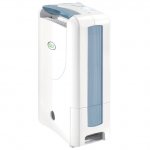
If you're looking for a quiet, quality dehumidifier, then this is a great option at a great price.
Normally around £150
Top comments
fat-pudding
2 Dec 153#9
That's utter nonsense, we ordered one of these (actually the better spec model) a few months back to assist with drying washing, sure enough it pulled a constant 600W and pumps most of that out as heat effectively acting as a massive heater too which isn't what we wanted. After a couple of hours running we were tipping away pretty much the same amount of water as the compressor based unit it replaced. I sent it back and ordered a compressor based (Ecoair) model which is using a quarter of the power and after a couple of hours.... we're tipping away the same amount of water.
All comments (116)
snoopy18
2 Dec 15#1
Usually £130, heat
ande1979
2 Dec 15#2
going to get this later bargain thanks
sprite127594
2 Dec 15#3
I just went for the one they had on a lightning deal for £99 this one
Didn't like the fact that this was around 600W where the one I got is around 230W.
I have the "classic" version of this, and I love it. I can recommend this British brand. I can recommend dessicant over compressor. Just decide whether you want to save a few quid with this "simple" model, with the manual controls, or try to get a deal on the Classic, which has more intelligent controls.
I dry laundry with mine in 4 hours and then it's packed away (instead of loads of racks everywhere for days). It clears condensation in the bathroom after a shower. Our black mold problem is significantly reduced. Owned it for a year with no issues, and no noticeable jump in electricity bill
dealchaser888 to The_Pope
2 Dec 15#52
Hi, could I use it right after the shower (stream all over), we could not put up an exhaust fan due to the room layout.
we also do not have any electric plug inside the bathroom, so do we need any caution (thinking use a extension leads)?
Now our only solution is to open wide the window but by doing that create more problems as well.
Thanks in advance.
sprite127594
2 Dec 152#6
This is why I went with a compressor. Our house never gets below 15°c in which case the compressor should do fine at a lot less wattage.
Zander_19
2 Dec 15#7
Cracking deal. I bought this model last year and it's fantastic. I also purchased the Lightning Deal for the other model yesterday linked to in a previous post.
Raimonds
2 Dec 151#8
I own the "EcoAir DD122 MK5 Desiccant Classic Dehumidifier with Ioniser and Silver Nano Filter" myself for about four years. It is a bit more costly to buy, but well worth the money invested. No faults, and the results are very good in lowering moisture and giving a nice smelling fresh and worm air! Recommend this dehumidifier!
fat-pudding
2 Dec 153#9
That's utter nonsense, we ordered one of these (actually the better spec model) a few months back to assist with drying washing, sure enough it pulled a constant 600W and pumps most of that out as heat effectively acting as a massive heater too which isn't what we wanted. After a couple of hours running we were tipping away pretty much the same amount of water as the compressor based unit it replaced. I sent it back and ordered a compressor based (Ecoair) model which is using a quarter of the power and after a couple of hours.... we're tipping away the same amount of water.
froggit
2 Dec 152#10
Bought one of these last year to combat a very damp flat.
Worth every penny
lidds
2 Dec 151#11
It only uses 580W on 'Turbo' mode. On regular it uses about 300W so have it on for an hour and it will cost about 3-4p.
(FYI don't trust the maths of the 'most helpful' review on amazon he over estimates the costs)
rlearmouth
2 Dec 15#12
Very good make. I have bought 3 over the years for different people/property. Pushes out a gentle heat. A genuine reduction too. Does need a lot of emptying in a damp environment though
paul555
2 Dec 15#13
Having never had one of these where would you normally position it in a semi-detached house? I get masses of condensation on my window in my bedroom sometimes. I wouldn't want it in the bedroom making noise though. Nor would I want it in the bathroom as per comment above
sprite127594
2 Dec 15#14
I think it Only uses 300W in the very lowest mode. The compressor uses 230W in its very highest mode.
lidds
2 Dec 151#15
There are only two modes, regular and turbo. In most instances regular will be perfectly fine and only uses 300W. It really is a good buy for £100 especially in winter when drying clothes inside. I also looked at the one you bought which has really good reviews too. Either way both are miles better than the £30/40 ones you see in Aldi!!
bobo53
2 Dec 15#16
a humidifier makes more sense in winter with the central heating on
Chiptivo to bobo53
2 Dec 15#74
your post make no sense in any season as it is not relevant
grahamc2003
2 Dec 15#17
excellent price for an excellent dehumidifier. I've had this model for about 3 years, and a compressor type, ebac, for about 10 years. Compressor types are much heavier so more difficult to move around. As to power use, the ebac is 230W, the dessicant is 400W on low and 800W on high.
The critical thing deciding which is the cheaper to use in order to remove a certain amount is water is the temperature. compressor types simply don't remove much at all below about 15C, and only start removing at a decent rate in high humidity and high temperatures, say about 25C. DEssicants remove water at all temperatures.
The other thing to say is that at25C in the UK you're unlikely to have adamp problem. if your house is below 15C for much of the time, you have a high chance of having a damp problem. The conclusion from all this is that most in the UK are much better off with a dessicant dehumidifier such as the one here.
BTW, you can largely ignore the bumpf which says 'removes 8/10/15litres per day'. That would only happen at very high temps and 100% relative humidity.
MaximusRo to grahamc2003
2 Dec 151#28
Always go for the compressor type if you want decent performance at removing water from the air in your room. As they really only cater for one room.
It's very unusual to have below 15C in your room/house, even with the heating off, your room/house should be at above 16, otherwise you really have to take care of that building, have some insulation installed, double glazing, generally check what the problem is.
At above 15C, there is no competition, a compressor type dehumidifier will remove 2 to 3 times more water from the air consuming less energy (230W v 600W typically), but remember that because compressor types are so much more powerful, they only need to work 20 mins or so per hour, while a desiccant type will run for much longer, sometimes the full hour. So don't measure consumption just instantly, but for the duration needed to achieve the same relative humidity level in the room.
Also keep in mind that contrary to what most seem to think, the air in the winter time is actually much drier than in the summer time, so if you do have a humidity/damp problem, you will need to run a dehumidifier in the summer as well. as for the winter, as above, you need to address the low temperature issue in your house, 99% of the times the solution being proper insulation.
Desiccant type will also distribute some chemicals in the air and smells, some are sensitive to them more than others, but you usually want your air clean, no chemicals added.
cezar91
2 Dec 15#18
i've been using this dehumidifier for over a year now and it is the best I have tested. I compared it to Bliss ones which are being sold by b&q so I placed both next to each other in a room with wet loundry. After 2hrs ecoair's container was about 0.5l and bliss's was maybe 50ml.
We use it mostly for loundry drying during non summer months. When set to max power it dries out a whole washing machine of loundry in 2-3hrs so yout clothes don't become smelly. Its a must when you have babies.
I also have Ecoair air conditioner installed in our bedroom and it works perfectly also.
kr00t0n
2 Dec 15#19
I've been using one for years, and prefer it to compressors because:
It's quieter.
It's smaller.
Whilst it does use more power, it also heats the air as it dries, so we don't need to use central heating as much which offsets the cost of it using more power. It also means it can be used in a cold flat.
Our problem was a well-insulated new build flat, with a bathroom that only has an extractor fan, no windows.
So the combination of drying clothes indoors, limited moisture removal from the bathroom, and our own exhalation at night, led to condensation on our windows and window frames, and dreaded mold!
With this humidifier, we could set the humidistat to keep a (roughly) consistent level of humidity in the flat (roughly as it was a little bit off compared to a standalone humidity monitor I got), and bang it on turbo when we had washing hung up.
Washing dried quickly, so it wasn't standing out in the lounge for as long, and used less electricity than the tumble-drier, with the added benefit of heating the flat.
The only real downside is if you have humidity issues during the summer, then compressor is the king.
MaximusRo to kr00t0n
2 Dec 15#30
You're bound to have humidity issues during the summer if you have them during the winter.
The heat generated by a dehumidifier is actually an issue, not a blessing... That is why I recommend compressor.
onion86
2 Dec 15#20
Had this over a year, bought to get rid of winter condensation and must say it's great. Used it all last winter and using it again now on the landing and in conservatory.. Paid £120, well worth it.
LostWelshman
2 Dec 15#21
I've had one for about a year, it's very good and i'm happy with it. Previously I had a Meaco DD8L which collected more water, faster and therefore spent more time in standby but - I went through three of them in a year and a half, not reliable in my case.
I would recommend this make / model.
prichuda
2 Dec 15#22
Excellent price. However ours is less than a year old and is now leaking, pond of water on the floоr after each use :disappointed:
futura
2 Dec 15#23
Great little machines, quiet and efficient. They used to do a rebranded version of these in screwfix/b&q too so might be worth checking offers there
chapchap
2 Dec 15#24
That is a compressor type so not as effective as desiccant types. Well not as effective in UK weather! I would go for this one but horses for courses.
bargains4us
2 Dec 15#25
is this useful for people with asthma and sleeping problems at night? thanks
chapchap
2 Dec 15#26
I got mine from Amazon for 109 quid so this is a bargain. But... I am on my third one already so thank god for the 2 year warranty and Amazon's easy returns i.e. they send a replacement and then you send the faulty one back.
lord_trumpington
2 Dec 15#27
We currently have a Delonghi humidifier which laps up loads of water in our Victorian 4 bed semi. Our house is large however so the range is contained to a single room so is fairly limited, I've learned over time to keep windows closed, close toilet doors etc but it still only has limited reach. Can anyone confirm what the range of the EcoAir is like and how effective it is in a larger house?
chapchap
2 Dec 15#29
For me the heat it produces is a plus, in the heart of winter we don't have the heating on over-night so when I used compressors they didn't take as much moisture out of the air plus compressors are too noisy! But compressor's are solid tech and cheaper per hour to run- of course (in my case/house) they don't take as much water out over that hour so not convinced they are cheaper to run when comparing time per litre of water removed. I would argue a lot/most people would benefit from a desiccant over a compressor- unless they either live in South-East Asia!
sprite127594
2 Dec 15#31
Yes it is as long as temps in your house is above 15c.
leebon
2 Dec 15#32
quiet, quality dehumidifier
grahamc2003
2 Dec 151#33
Not sure where you get your information regarding the efficiency of water extraction from, but i've read unbiased and respected test reports showing the opposite to your view. My own experience of using both for years agrees with those tests. The cheapest method of removing water under almsot all uk home sceanrios is using dessicants. That is, even though using more power, they remove proportionally more water than compressor types undr almost all circumstances.
You pollution/chemical point seems to be nothing more than scaremongering.
Your point about being needed in summer if dehumidification is needed in winter is also completely incorrect. Our problems of condensation only occur in winter, and I know why that is the case. Relative humidity increases as temperatures decrease, so condensation/damp usually only occurs in colder months (unless there are structural problems in your property).
Given that damp/humidity are due to too low a temperature, the heating from a dessicant type is welcomed and a further benefit. The temperature rise itself lowers the rh in addition to the water removed from the air.
chapchap
2 Dec 15#34
That is the point everyone should be aware of- if your house is always warm/heating always on (even at 2/3/4/5am etc) a compressor is a good choice. But...if not, they are a not as effective by half.
fat-pudding
2 Dec 15#35
Sure, but I have gas central heating so that's a quarter of the cost to run to heat the house and we only use the dehumidifier upstairs when drying washing so I don't want it so hot in bedrooms. I also found that the Ecoair compressor dehumidifier is pretty much the same noise level as this! Yes it is slightly louder but in real terms negligible.
chapchap
2 Dec 15#36
My house must be buggered- if we leave the heating on it gets boiling so switch it off at night. But by the morning it is freezing so windows get horrible condensation. We must have very good hearing as the noise difference is easy to pick up- esp. the times the old compressor switched on. That made a bit of a sudden,loudish noise which could startle us.
myrah
2 Dec 15#37
Thank you for posting this deal OP. I was gutted at missing the Lightning deal on the compressor type previously and was going to order at regular price. Have ordered this one now. :smiley:
kr00t0n
2 Dec 15#38
Well I'm glad you know more about my flat than I do, even though I have lived here for 5 years, lol.
No issues with humidity in the summer, as the humidity in the winter is DUE to insulation and not opening the windows. In the summer we can have the windows open, so there is no build up of humidity from our showers, laundry, or breathing.
Both systems have their pros and cons, and this particular one have more pros FOR ME.
YMMV.
BigAde
2 Dec 15#39
Very tempted. Can someone who already has one of these answer me a question please?
The bedrooms currently suffer from really bad condensation in the winter months, we currently use a Karcher window vac each morning to get rid of the worst of it, although it's a bit time consuming in the morning rush to do all 3 bedrooms. SWMBO, while open to the idea of removing the damp (and presumably helping remove the musty smell it brings), refuses to have a dehumidifier running all night, no matter how quiet. So, would I be able to run it for an hour each morning (presumably on the high setting) and would that have enough time to make any difference. Room is average size, around 12x10?
grahamc2003 to BigAde
2 Dec 151#40
I have this one and a lot of experience using it (and compressor types too).
No, an hour per day won't remove sufficient water to stop the bad condensation you get. (I get the same i one room with lost of large windows, and also clear them in the winter with the excellent window vac).
We run our dessicant type overnight in our bedroom (on economy seven so costs about 15p per night to run) and that keeps things dry in the bedroom; previously we had a bit of mould appear on the walls when the windows were shut.
There's very little noise on the low setting on this particular dehumidifier. and it turns itself off if the relative humidity gets to the correct level. But run it all night, at least for a while on cold nights to get the moisture out of the bd, carpets walls etc. Remember that two of you put a litre or two of of water in the air while sleeping.
MaximusRo
2 Dec 15#41
Sorry, I should have added insulation and ventilation go hand in hand, you cannot make your flat air tight (insulation, double glazing and so on) and not provide proper insulation. That still means your problem is with your flat, that doesn't have proper ventilation (the windows frames should provide one, there should be adequate space at the bottom of the doors, especially on the bathroom one and so on). Basically, in a new build, you should not need a dehumidifier, if you do, you should contact the contractor to fix it (I think there is a 10 year guarantee that comes with new builds). But it is tricky to get the proper balance between insulation and ventilation, and it gets lost in translation with most builders
BigAde
2 Dec 151#42
grahamc2003 - that's a great help, thank you!
mistafaz
2 Dec 15#43
No ioniser, timer or electronic control panel on this one
Kazan to mistafaz
2 Dec 151#44
and that is why it's £60 cheaper than Classic one.
Might be worth investing in some heating controls that can have different temps for different times.
chapchap
2 Dec 15#47
On Amazon they are usually 130/140 quid. I wouldn't buy expensive electrical items from flea bay myself but good luck to you. For £99 you get Amazon's returns policy i.e. best in the business.
shbunning
2 Dec 15#48
We use a couple of dehumidifiers fairly regularly and find them brilliant in the notoriously humid and cold conditions up in Orkney. One stays permanently in the utility room to dry laundry. The other has a roaming commission: at the moment it's in the porch to keep timbers from swelling too much, where temperatures around outside + a couple of degrees. The cars have a turn every few weeks through the winter; an overnight blast tends to suck out a pint or so and keeps windscreens from misting. The old caravan gets a week on low before visitors use it (and has helped the interior to stay immaculate).
After dabbling with a compressor type indoors years ago I would now not wish to leave our desiccant route - reliable, relatively quiet, economical (not real-world difference for us) and flexible. Very happy with our latest Eco-Air.
kr00t0n
2 Dec 151#49
I'm well aware of this too, but opening the windows, or indeed just the vents, means all that lovely heating we are paying for is literally being thrown outside and wasted.
In an ideal world, I'd get a heated positive-pressure system from Drimaster, but this is an ok middle-ground.
dragonking0141
2 Dec 15#50
spent 180 on meaco 20l last week
Hankdom to dragonking0141
2 Dec 15#56
Where did you get that from? Looking at the Meaco Platinum 20 Litre Low Energy Dehumidifier and can't find it cheaper than £227 at the moment.
dilfred
2 Dec 15#51
We have the classic version (with timer, ioniser and control panel) and it does wonders in our old damp Georgian House. We have had mould on the walls and chesty coughs, but since using the dehumidifier all gone away.
SO recommend even without the extra 3 items I listed above.
Though I must say the timer is valuable, great to turn on in a room and leave for a few hours as a "top up" rather than until I get around to turning it off.
grahamc2003
2 Dec 15#53
It's probably against regulations and probably not advisable as there is a definite potential danger of using extension leads and plugs in a bathroom. Having said that, it's exactly what we do (mainly because i understand electricity and the dangers posed, so can minimise them). Depends on your attitude to risk, and whether you're comfortable going against regs (which are there for a good reason) - obviously, don't put anyone else except yourself at risk.
dealchaser888
2 Dec 15#54
many thanks for your kind advice, much appreciated.
we really desperate to sort it out (unfortunately we have no money to rebuilt the whole room), we find it hard (in term of health issue) during the winter time.
grahamc2003
2 Dec 15#55
I think in your situation from the limited information i would consider having a shower with the doors/windows shut, get dried and dressed and when finished put the dehumidifier in there and close the door.
Alternatively, when finished, leave the door open and have the dehumidifier positioned just outside the door, which would be perfectly safe and not against any regs.
Torres76
2 Dec 15#57
Is this the best possible dehumidifier between the £100-£150 price bracket?
Thanks all
JamesSmith to Torres76
2 Dec 151#70
IMO the £120 ALDI 20L they had recently is the best deal, you would have to see if your store has any left.
Fairly quiet, good range of features including timers, pulls a lot of water and good price.
I think the condenser type are - unless you're putting it somewhere cold - no less efficient, more robust and are less prone to putting out bad smells. They are only slightly louder too if you find a decent one. Ultimately both type rely on a similar fans, the condenser doesn't make much noise it's quieter than a fridge. In a desiccant unit the fan is buried slighter further down, but really, the difference isn't that big. Reliability is, however, and far too many early failures on the desiccants (including this model) for my liking..
dealchaser888
2 Dec 15#58
thanks so much, I just mentioned to my other half and we just bought one and then we were still not so sure how to make it work
thanks to you help us to fill up all the blanks. thanks so much.
money monster
2 Dec 15#59
Is this sufficient at 2 Litres? I intend to use in a 2 bed flat that's sub 15c temp with damp and mould present.
@money monster - the EcoAir is a '7-litre' machine, with a collection tank capacity of 2 litres.
Besides, you can't compare the two - the Trotec is a compressor machine and its rate will be measured at high temperature and humidity. If your flat is sub 15c you should go for a desiccant like this one.
Also - EcoAir is a good brand - never heard of Trotec.
MaximusRo
2 Dec 15#61
Not really, it's not as simple as that, and I did say it's a delicate balance, you cannot compensate the fresh air intake with a dehumidifier. The vents will just ventilate, not cool your house. The fresh air is not optional, is a must.
There are many more high tech options (heat pumps) but vents, as I said, are not optional and cannot be replaced with a dehumifier! You need the fresh air to keep bacteria under control, CO2 level etc. What you said is really bad practice/bad advice and a bit silly, and should not be followed by anyone. I'm sure you meant well, but you do risk to get sick in your house if you keep watching your heating bill that much that you are willing to skimp on fresh air but willing to pay more on electricity to run a desiccant (or any other) dehumidifier.
Hagrid0
2 Dec 151#62
^ What would anyone suggest for drying clothes (no tumble drier) in a newish build?
Clothes horse with ventilation in closed room?
Clothes horse with radiator in closed room?
Clothes horse with dehumidifier? - is this beneficial for a newish build?
Gutted as I ordered from Amazon last week for £139.99. :disappointed:
Amazon have dropped it to £109 now.. and agreed to refund me £30... I took that as couldnt be bothered to return for Amazon for full refund, started using it already.
Torres76
2 Dec 15#64
How does this compare to the above Delonghi? Is there any other product in the £100-£150 price bracket that I should consider?
kondziook
2 Dec 15#65
Had the classic one for a year now and I'm vary happy with it. Top quality, well worth the money.
happydeals
2 Dec 151#66
I recently bought two dehumidifiers recently (both compressor type- De Longhi & EcoAir DC12) and I will be returning one. Based my understanding on both types, compressor type will work well when humidity is high and rooms are heated. I believe it is ideal for bathrooms where humidity level will reach almost 100% at times. It may not be that efficient at low humidity level where desiccant type is more suitable. Compressor type works well on heated rooms or summer period whereas desiccant type is less impacted by the room temperature.
Compressor type is slightly more nosier than desiccant type, but Ecoair DC12 is relatively less noisy.
Power consumption of compressor type is less than the desiccant type although it is less significant in winter as hot air from the dehumidifier can heat up the house, but it may be an issue in summer.
Jimmyboy
2 Dec 15#67
Same for me, use it in the winter to clear the condensation in my dining room when cooking and also to clear the bathroom every night. My electricity consumption seems no different to before and this does a great job. Had it just over a year and still going strong.
esq3585
2 Dec 15#68
I fitted this to our bungalow last year as we were getting constant problems with condensation on windows, behind cupboards , even on the back bedroom ceiling which ended up mouldy, after fitting the drimaster we have had no issues, we did run dehumidifiers over the years , delonghi and the ecoair when the delonghi packed in but what solved it big time for us was the drimaster, check out the info on it here http://www.doyourdream.co.uk/2013/01/installing-a-drimaster-heat-piv-system/ money well spent imo.
jldevoy
2 Dec 15#69
Orderred: The main reason we have for dampness in winter is showers and clothes drying with all the windows closed, this should be perfect for that.
Tomas88
2 Dec 15#71
Thanks for posting, was looking for one with good price
smurkenstein
2 Dec 15#72
I have two ecoairs - I had a DEM 10 delongi compressor for about two days - but it was noisy and incredibly feeble at extracting moisture - I sent it back.
fizzervbf
2 Dec 15#73
Great for drying clothes, no creases :stuck_out_tongue:
Only got an hour left to consider this but wanting some advice to if this one would suit my property. The house i live in is 1930's i have no problems downstairs. We have gas heaters upstairs but i only use one on my landing to heat all rooms during winter. The windows are dripping every morning and in one of the bedrooms the walls and ceiling corners near the outside wall is getting very mouldy and i am having to use a mould bleach to keep it looking tidy! Every year i have to decorate the walls and reseal the double glazing as the sealant turns black from the damp.
I just wanted to buy one i could put on the Landing and it would help all rooms instead of buying one for each room.
Would this be the type of Dehumidifer i would need? Would be a bonus if it was some kind of heater at same time would save me on my gas bill :smiley:
JamesSmith to yorkielisa
2 Dec 151#77
This will do the job. They are very popular. There's no timers on this though and you can't put it on a timer switch (needs to go through a shutdown process) so that's worth bearing in mind. Their slightly more expensive one does have timers.
You might alternatively find a condenser type offers some savings on running cost, and there's a good chance it will last longer. Personally my preference but there's pros and cons to each. The desiccant produce more heat, if that's not an issue when it's blazing hot in the summer!
Either way you need to allow air to move between rooms, to get the air in conjoining rooms down. By the sounds of it you should see substantial improvement. Mould growth occurs especially above 60%+ humidity so 50-60% is a fair target.
Beware of running costs!
Jimmyboy to yorkielisa
2 Dec 151#79
I think this would work better if you put it in the individual rooms with doors shut for a period of time each day. I think it would be more effective that way, it's not really powerful enough to do all the rooms at once I wouldn't have thought.
I've no idea why some are saying a compressor type would suit your situation. In almost all cases, a dessicant one outperforms compressor types. They are completely different technologies with differing characteristics, the main one being low temperature perfomance. Basically compressor types simply don't work in lower temperatures - dessicant types do. So really you have little choice there. Don't expect any dehumidifier to completely remove condensation on windows on very cold nights, especially if single glazed- just expect an improvement. a 400W dehumidifier (like a dessicant) will produce about 401W of heat - so about the same as half a single bar electric fire, which itself makes the rooms more comfortable and further reduces relative humidity. (Incidentally, a compressor type using 250W will also supply heat, at about 251W). I'd say get the one which is the subject of this thread (and I have both types and understand in deatil how both types work). As to cost, 400W will cost you about 7p per hour (at a 16p unit rate) or about 2.5p/h on economy seven (at 6p per unit at night).
JamesSmith
2 Dec 151#78
Incidentally if you have mould like that, it would be worth going FULL BLAST for a while, so it's not just drying the air, but pulling water out of your damp property / belongings also.
Good luck!
yorkielisa to JamesSmith
2 Dec 15#80
Thanks for reply James is this the better than the screwfix one? After reading lots of reviews i seem non the wiser! Just thinking it must be a desiccant type one i must need.Just been looking on Amazon is it the MK5 one that as the timer? Thanks
Thanks esq3585 I have seen this before but didn't really read up about it looks like too much hard work for me.
twinmum123
2 Dec 15#83
thank you, so much, great offer, was about to buy one anyway, now i got it cheaper :wink:
esq3585
2 Dec 15#86
It really is easy to wire up and fit to ceiling, we had run 2 different dehumidifers over the years and had no success around walls behind cupboards and ceiling windows, window frames, really bad running water through the winter even with the dehumidifers, now with the drimaster its completely gone, it really is worth the effort to get one, wish we had done it sooner tbh.
JamesSmith
2 Dec 151#87
Mk5 has the timer yes.
I would choose the Screwfix, not many reviews, but I'd probably take a punt on that.. one chaps says he's experienced a range of machines and likes that, so that inspires some confidence..
Can't answer for which type to go for, pros and cons. For me I don't want heat in the summer, I'd like confidence it will last 5-10 years, and I'm sensitive to odours too... so I plonk for the condenser type.. YMMV
Both are popular and well reviewed.. There's a chance of getting a dud desiccant so Amazon is a good idea incase it has to go back.. The condenser ones should be kept upright for 24hrs before use.
yorkielisa
2 Dec 15#88
Thanks for the advice all, I have to just purchased this one. Esq3585 I will look into it in the new year but hope this one does help until i decide.
I've seen real world tests comparing power consumption for the same water volume in the same conditions the condensers have slightly lower running costs.
Not everyone wants a 400w heater in the summer, among other pros and cons.
Wow.. generates energy from thin air defying the law of physics.. must get me one of those !! :stuck_out_tongue:
RowanDDR
3 Dec 15#90
No idea dude, you'll have to research it yourself. The one in OP is "Desiccant" whereas the one I posted is not. Desiccant uses more energy and is noisier, from what I've read.
grahamc2003
3 Dec 151#92
Well not understanding physics proves why you have your views on dehumidifiers incorrect.
You get 400W from the elecrticity used, and about 1W from the release of the latent heat of evaporation as the water condenses.
Other points - If you regularly need a dehumidifier in the summer in the uk then yor real problem is sturctural problems in your house. Relative humidity falls as temperatures rise, and generally there's no mould/condensation problems in the summer and dehumidifiers aren't usually necessary. So the heating is a non-issue (in the winter opf course, it is a free benefit in addition to the dehumidification).
I have read professional reports from respectable sources which agree with my several years of dehumidifier experience which state that almost always, dessicant dehumidifiers outperform compressor types under almost all uk home scenarios. (the latter even freeze up at low ambient temperatures)
J9STL
3 Dec 15#93
some good, but some not so good reviews too on this stuff - have you used it ?
Kate_82
3 Dec 15#94
Expired! Back up to £131.85 now.
getmore4less
3 Dec 15#95
Why cant you have the shower then close the door open the window, will only take a few mins to exchange the air and you can close it again.
If you have a window you can have an extractor as long as you can get power to it
Jimmyboy
3 Dec 15#96
That doesn't work for me in my house. We have a power shower and my wife has it super hot. Opening the window on a cold night just makes everything in the room cold and creates more condensation. The radiator is one of those useless towel warmer ones that pumps out virtually no heat. I'm having the bathroom replaced in January and a decent radiator etc. I'm not convinced by extractor fans, they appear to have no impact.
I put this email to n after a shower and warms and dries the room nicely.
jldevoy
3 Dec 151#97
One problem in bathrooms can be that the cistern acts as a cooling block because its full of cold water, so you get a ton of condensation on it dripping.
grahamc2003 to jldevoy
3 Dec 15#98
Yeah, and there's also a level of energy waste when you flush because you're flushing away warmish water and replacing it with cold water, which is then slowly warmed again from the heat in the room. Surprised someone hasn't brought out an attractive insulator for the cistern - not sure hot water tank insulation would be the thing!
archarius to jldevoy
3 Dec 15#100
You can use a hose provided and drain the water straight into the sink.
archarius
3 Dec 15#99
Just received it and turned it on in my bedroom, fingers crossed.
dealchaser888
3 Dec 15#101
thanks for your advice, we try that before and make things worse as all watery over the tiles walls and everywhere ceiling, floor...
the air do not blow away the moisture but just blow in without bring it out. It's much worse at winter time, make the whole floor freezing
happydeals
3 Dec 15#102
400 W dehumidifier will not produce 401 W of heat and 250 W compressor type will not produce 251 w of heat!
A very small fraction of the duty will only be converted to heat.
happydeals
3 Dec 15#103
I had the same problem. The condensation still happen even if I leave the windows. I was initially reluctant to buy the dehumidifier, but bought it recently. I tried it on my bathroom and it solved the condensation problem. I ran it for few hours at night and when I take the shower.
NitrousUK
4 Dec 15#104
Don't you mean "sensible heat"? Latent heat is when energy is absorbed (to overcome the intermolecular forces) during a phase change from solid to liquid, or liquid to gas. Sensible heat is transfer of heat in a system.
Also, I don't think it's correct to say it creates heat in the room. The heat was already there in the room. You're just ensuring it doesn't leave along with the water when you pour it down the sink.
Lastly, I don't think it's possible to achieve 100% efficiency of heating, when the unit is moving air and affecting a thermodynamic change, which is work that requires energy.
JamesSmith
4 Dec 15#105
I live in a graded single brick building constructed in 1770. It does not have "structural problems" but it wasn't designed modern efficiencies in mind. The damp is worse during the summer. What I absolutely don't want is a heater on, in the summer. It's not uncommon in older properties.
Posted this before.. for unknown reasons someone complained and had the post pulled. Anyway, I think it's helpful information so here it is again. (I've seen other similar tests corroborating this one).
There are two common dehumidifier technologies both have pros and cons.
Condensers last for years, don't require costly filter replacements, are less prone to kicking out odours, are cheap to buy and cheap to run.
Desiccants pull more water in a shorter time, work better in cold conditions ie. empty properties, and may be slightly quieter.
grahamc2003
4 Dec 15#106
No, I didn't mean sensible heat (which involves heat exchange with a temperature change). Latent heat (heat exchange without temperature change) is, as you yourself stated so I'm a little puzzled, when solids or fluids change state - in this case we are talking about water changing from gaseous state to a liquid state (that's what a dehumidifier is all about!). The latent heat of evaporation is released as gaseous water (i.e. water vapour) condenses to liquid water in the dehumidifier. In answer to your question, it is a heat input onto the cooling fins of the dehumidifier which does cause a slight warming in the room.
Contrary to what you state, electric heating is always 100% efficient. The electrical energy consumed in any electrical device always ends up as heat, so if you have a 100W amplifier for example, that will put 100W of heat into the room (a small amount will pass through an alternative energy state, air vibration creating sound, before it ends up as heat). In the case you mention, of energy causing air movement through the dehumidifier, then viscous drag will eventually dissipate the kinetic energy of the air back to heat.
grahamc2003
4 Dec 15#107
Regarding the report you quote - i'm afraid its simply engineering nonsense. It is merely stating that a device using 400W is more expensive to run, while it's running, than a 250W device. That is self evident and a pointless conclusion.
The salient point which your testers would have investigated were they engineers is the cost to condense a certain amount of water out of the air. If say after say 1 hour the 400W dehumidifier has removed 1 litre of water at a cost of 10p and the 250W device had removed 10cc of water at a cost of 6p, then which would you say was the more efficient?
I would be very careful about reading internet reviews and tests, that's why i saw fit to mention that the tests i had read were by respected engineering consultancies who know what they are doing, and not bulletin board bloggers who, with rare exceptions, don't, ime.
JamesSmith
4 Dec 15#108
No that's not what it shows - what it shows is in real world conditions the condenser drew almost half the power of the desiccant equivalent for roughly the same net outcome in humidity.
It suggests the litre/kWh efficiency of condenser dehumidifiers is substantially better and I've seen other anecdotal real world tests that draw the same conclusion.
No amount of condescending remarks will substitute for actual evidence, so maybe if you would kindly produce these " respected engineering " reports on consumer dehumidifiers you speak of... ?
grahamc2003
4 Dec 15#109
Your extract doesn't state anything at all about the extraction rate and cost - if it did, why didn't you post the relevant bit instead of a totally irrelevant extract?
Obviously I looked for reports i read several years ago but either they are not available or take more time than i'm prepared to put in to now find them. I was motivated then because i had just bought an ebac (probably the leading uk make) compressor type which really wasn't extracting anything like the claims. (And no wonder - the removal rate quoted is from manufacturer tests at 28C and 80%rh for compressor types, without the information that removal drops to pretty well zero at low temperatures).
JamesSmith
4 Dec 15#110
Oh dear.. seems Ebac's engineers are 100% in accord with that " engineering nonsense " - they agree desiccant running costs are about double under normal circumstances, just as that " report " showed.
Ebac make both refrigerant and desiccant dehumidifiers too btw.
grahamc2003
4 Dec 15#111
Did you actually read my reply? Yes, your report, ebac and me are all in agreement that a 400W dessicant will cost more per hour than a 250W compressor. Ebac used to only make compressor types when i bought mine and were late into the dessicant market. Why did they enter if, as they state in one place, compressors almost always outperform dessicants?
I think you, and to a certain extent ebac, are missing the point that damp and humidity are almost always caused by 'insufficient' or low heating (relative to those who like every room in their home at 24/25C). The problem with almost everyone ( i note you are an exception and have summer humidity problems as if you live in new york or the tropical rain forests) in the uk occurs where rooms are at a lower temperature, exactly where dessicants outperform compressors, and I'd like to see in detail how ebac came up with 10C for the breakeven point. Remember that at these temperatures relatively very little water is held in the air even at high relative humidity, so the removal of a little lowers the rh quite quickly, moving once again into a lower rh regime where dessicants have superior performance. All this theory is backed up by my own experience too - i extract much more water (and more proportionally to the cost) from my dessicant than any of my compressor types running overnight in winter (the only time i use them).
I think I've said enough and probably bored everyone to death, including myself, and I'm sure everyone has enough info to make a decision on which is best for them, so I'll leave it there.
JamesSmith
5 Dec 15#112
No. I was talking about efficiency. As are Ebac :
"At 20C and 60% RH the refrigerant dehumidifier almost twice as efficient as a desiccant dehumidifier."
happydeals
5 Dec 15#113
I agree with you. Compressor type is significantly more efficient at higher humidity conditions and in normally heated rooms. It can work well in summer and winter conditions.
If you do not want to bring down the RH below 50%, it is better to use compressor type. I use it bathroom where the humidity goes above 90% during shower.
[[/i]
bellboys
28 Dec 15#114
After patiently waiting for this to return to £100 again and then going to order it at £130, and after a bt of further research I decided to go for the Classic model, which I got for £140 delivered from Appliances Direct (£170 from Amazon) by signing up for the Which trial which gives £20 discount. Seems to have some genuinely useful extra features but time will tell.
Chiptivo
28 Dec 15#115
dessicant are best.
/thread
JamesSmith to Chiptivo
28 Dec 15#116
If you aren't bothered by the very high failure rates.
Nor the near-double running costs of the desiccant - which is the norm for rooms where the temp is above 10C.

![Fresh Breakfast Meat Box (Using code) @ Campbells Meat [Haggis / Lorne Sausage / Bacon / Black Pudding & More]](/images/topics/208684_1.jpg)





























![[Xbox One] Q. u. b. e: Director's Cut on Deals with Gold](/images/topics/208716_1.jpg)












Opening post
Normally around £150
Top comments
All comments (116)
Didn't like the fact that this was around 600W where the one I got is around 230W.
I dry laundry with mine in 4 hours and then it's packed away (instead of loads of racks everywhere for days). It clears condensation in the bathroom after a shower. Our black mold problem is significantly reduced. Owned it for a year with no issues, and no noticeable jump in electricity bill
we also do not have any electric plug inside the bathroom, so do we need any caution (thinking use a extension leads)?
Now our only solution is to open wide the window but by doing that create more problems as well.
Thanks in advance.
Worth every penny
(FYI don't trust the maths of the 'most helpful' review on amazon he over estimates the costs)
The critical thing deciding which is the cheaper to use in order to remove a certain amount is water is the temperature. compressor types simply don't remove much at all below about 15C, and only start removing at a decent rate in high humidity and high temperatures, say about 25C. DEssicants remove water at all temperatures.
The other thing to say is that at25C in the UK you're unlikely to have adamp problem. if your house is below 15C for much of the time, you have a high chance of having a damp problem. The conclusion from all this is that most in the UK are much better off with a dessicant dehumidifier such as the one here.
BTW, you can largely ignore the bumpf which says 'removes 8/10/15litres per day'. That would only happen at very high temps and 100% relative humidity.
It's very unusual to have below 15C in your room/house, even with the heating off, your room/house should be at above 16, otherwise you really have to take care of that building, have some insulation installed, double glazing, generally check what the problem is.
At above 15C, there is no competition, a compressor type dehumidifier will remove 2 to 3 times more water from the air consuming less energy (230W v 600W typically), but remember that because compressor types are so much more powerful, they only need to work 20 mins or so per hour, while a desiccant type will run for much longer, sometimes the full hour. So don't measure consumption just instantly, but for the duration needed to achieve the same relative humidity level in the room.
Also keep in mind that contrary to what most seem to think, the air in the winter time is actually much drier than in the summer time, so if you do have a humidity/damp problem, you will need to run a dehumidifier in the summer as well. as for the winter, as above, you need to address the low temperature issue in your house, 99% of the times the solution being proper insulation.
Desiccant type will also distribute some chemicals in the air and smells, some are sensitive to them more than others, but you usually want your air clean, no chemicals added.
We use it mostly for loundry drying during non summer months. When set to max power it dries out a whole washing machine of loundry in 2-3hrs so yout clothes don't become smelly. Its a must when you have babies.
I also have Ecoair air conditioner installed in our bedroom and it works perfectly also.
It's quieter.
It's smaller.
Whilst it does use more power, it also heats the air as it dries, so we don't need to use central heating as much which offsets the cost of it using more power. It also means it can be used in a cold flat.
Our problem was a well-insulated new build flat, with a bathroom that only has an extractor fan, no windows.
So the combination of drying clothes indoors, limited moisture removal from the bathroom, and our own exhalation at night, led to condensation on our windows and window frames, and dreaded mold!
With this humidifier, we could set the humidistat to keep a (roughly) consistent level of humidity in the flat (roughly as it was a little bit off compared to a standalone humidity monitor I got), and bang it on turbo when we had washing hung up.
Washing dried quickly, so it wasn't standing out in the lounge for as long, and used less electricity than the tumble-drier, with the added benefit of heating the flat.
The only real downside is if you have humidity issues during the summer, then compressor is the king.
The heat generated by a dehumidifier is actually an issue, not a blessing... That is why I recommend compressor.
I would recommend this make / model.
You pollution/chemical point seems to be nothing more than scaremongering.
Your point about being needed in summer if dehumidification is needed in winter is also completely incorrect. Our problems of condensation only occur in winter, and I know why that is the case. Relative humidity increases as temperatures decrease, so condensation/damp usually only occurs in colder months (unless there are structural problems in your property).
Given that damp/humidity are due to too low a temperature, the heating from a dessicant type is welcomed and a further benefit. The temperature rise itself lowers the rh in addition to the water removed from the air.
No issues with humidity in the summer, as the humidity in the winter is DUE to insulation and not opening the windows. In the summer we can have the windows open, so there is no build up of humidity from our showers, laundry, or breathing.
Both systems have their pros and cons, and this particular one have more pros FOR ME.
YMMV.
The bedrooms currently suffer from really bad condensation in the winter months, we currently use a Karcher window vac each morning to get rid of the worst of it, although it's a bit time consuming in the morning rush to do all 3 bedrooms. SWMBO, while open to the idea of removing the damp (and presumably helping remove the musty smell it brings), refuses to have a dehumidifier running all night, no matter how quiet. So, would I be able to run it for an hour each morning (presumably on the high setting) and would that have enough time to make any difference. Room is average size, around 12x10?
No, an hour per day won't remove sufficient water to stop the bad condensation you get. (I get the same i one room with lost of large windows, and also clear them in the winter with the excellent window vac).
We run our dessicant type overnight in our bedroom (on economy seven so costs about 15p per night to run) and that keeps things dry in the bedroom; previously we had a bit of mould appear on the walls when the windows were shut.
There's very little noise on the low setting on this particular dehumidifier. and it turns itself off if the relative humidity gets to the correct level. But run it all night, at least for a while on cold nights to get the moisture out of the bd, carpets walls etc. Remember that two of you put a litre or two of of water in the air while sleeping.
After dabbling with a compressor type indoors years ago I would now not wish to leave our desiccant route - reliable, relatively quiet, economical (not real-world difference for us) and flexible. Very happy with our latest Eco-Air.
In an ideal world, I'd get a heated positive-pressure system from Drimaster, but this is an ok middle-ground.
SO recommend even without the extra 3 items I listed above.
Though I must say the timer is valuable, great to turn on in a room and leave for a few hours as a "top up" rather than until I get around to turning it off.
we really desperate to sort it out (unfortunately we have no money to rebuilt the whole room), we find it hard (in term of health issue) during the winter time.
Alternatively, when finished, leave the door open and have the dehumidifier positioned just outside the door, which would be perfectly safe and not against any regs.
Thanks all
https://www.youtube.com/watch?v=Z0cryfuxCro
Fairly quiet, good range of features including timers, pulls a lot of water and good price.
I think the condenser type are - unless you're putting it somewhere cold - no less efficient, more robust and are less prone to putting out bad smells. They are only slightly louder too if you find a decent one. Ultimately both type rely on a similar fans, the condenser doesn't make much noise it's quieter than a fridge. In a desiccant unit the fan is buried slighter further down, but really, the difference isn't that big. Reliability is, however, and far too many early failures on the desiccants (including this model) for my liking..
thanks to you help us to fill up all the blanks. thanks so much.
£40 more for a 20 L
http://www.amazon.co.uk/TROTEC-TTK-Dehumidifier-max-24h/dp/B00FJ6DJLM/ref=sr_1_16?s=kitchen&ie=UTF8&qid=1449076283&sr=1-16&keywords=dehumidifier
Besides, you can't compare the two - the Trotec is a compressor machine and its rate will be measured at high temperature and humidity. If your flat is sub 15c you should go for a desiccant like this one.
Also - EcoAir is a good brand - never heard of Trotec.
There are many more high tech options (heat pumps) but vents, as I said, are not optional and cannot be replaced with a dehumifier! You need the fresh air to keep bacteria under control, CO2 level etc. What you said is really bad practice/bad advice and a bit silly, and should not be followed by anyone. I'm sure you meant well, but you do risk to get sick in your house if you keep watching your heating bill that much that you are willing to skimp on fresh air but willing to pay more on electricity to run a desiccant (or any other) dehumidifier.
Clothes horse with ventilation in closed room?
Clothes horse with radiator in closed room?
Clothes horse with dehumidifier? - is this beneficial for a newish build?
Thanks
http://www.delonghi.com/en-gb/products/comfort/air-treatment/dehumidifiers/tasciugo-ariadry-slim-des-12-0148712202
(Direct from Delonghi its £89.99 delivered)
Gutted as I ordered from Amazon last week for £139.99. :disappointed:
Amazon have dropped it to £109 now.. and agreed to refund me £30... I took that as couldnt be bothered to return for Amazon for full refund, started using it already.
Compressor type is slightly more nosier than desiccant type, but Ecoair DC12 is relatively less noisy.
Power consumption of compressor type is less than the desiccant type although it is less significant in winter as hot air from the dehumidifier can heat up the house, but it may be an issue in summer.
I just wanted to buy one i could put on the Landing and it would help all rooms instead of buying one for each room.
Would this be the type of Dehumidifer i would need? Would be a bonus if it was some kind of heater at same time would save me on my gas bill :smiley:
You might alternatively find a condenser type offers some savings on running cost, and there's a good chance it will last longer. Personally my preference but there's pros and cons to each. The desiccant produce more heat, if that's not an issue when it's blazing hot in the summer!
Either way you need to allow air to move between rooms, to get the air in conjoining rooms down. By the sounds of it you should see substantial improvement. Mould growth occurs especially above 60%+ humidity so 50-60% is a fair target.
Beware of running costs!
http://www.ebay.co.uk/itm/Nuaire-Drimaster-HEAT-Positive-Input-Ventilation-Condensation-and-Mould-Cure-PIV-/181615467311?hash=item2a49201b2f:g:vKEAAOSwg3FUkI9F
Good luck!
I would choose the Screwfix, not many reviews, but I'd probably take a punt on that.. one chaps says he's experienced a range of machines and likes that, so that inspires some confidence..
Can't answer for which type to go for, pros and cons. For me I don't want heat in the summer, I'd like confidence it will last 5-10 years, and I'm sensitive to odours too... so I plonk for the condenser type.. YMMV
Both are popular and well reviewed.. There's a chance of getting a dud desiccant so Amazon is a good idea incase it has to go back.. The condenser ones should be kept upright for 24hrs before use.
I've seen real world tests comparing power consumption for the same water volume in the same conditions the condensers have slightly lower running costs.
Not everyone wants a 400w heater in the summer, among other pros and cons.
Wow.. generates energy from thin air defying the law of physics.. must get me one of those !! :stuck_out_tongue:
You get 400W from the elecrticity used, and about 1W from the release of the latent heat of evaporation as the water condenses.
Other points - If you regularly need a dehumidifier in the summer in the uk then yor real problem is sturctural problems in your house. Relative humidity falls as temperatures rise, and generally there's no mould/condensation problems in the summer and dehumidifiers aren't usually necessary. So the heating is a non-issue (in the winter opf course, it is a free benefit in addition to the dehumidification).
I have read professional reports from respectable sources which agree with my several years of dehumidifier experience which state that almost always, dessicant dehumidifiers outperform compressor types under almost all uk home scenarios. (the latter even freeze up at low ambient temperatures)
If you have a window you can have an extractor as long as you can get power to it
I put this email to n after a shower and warms and dries the room nicely.
the air do not blow away the moisture but just blow in without bring it out. It's much worse at winter time, make the whole floor freezing
A very small fraction of the duty will only be converted to heat.
Also, I don't think it's correct to say it creates heat in the room. The heat was already there in the room. You're just ensuring it doesn't leave along with the water when you pour it down the sink.
Lastly, I don't think it's possible to achieve 100% efficiency of heating, when the unit is moving air and affecting a thermodynamic change, which is work that requires energy.
Posted this before.. for unknown reasons someone complained and had the post pulled. Anyway, I think it's helpful information so here it is again. (I've seen other similar tests corroborating this one).
There are two common dehumidifier technologies both have pros and cons.
Condensers last for years, don't require costly filter replacements, are less prone to kicking out odours, are cheap to buy and cheap to run.
Desiccants pull more water in a shorter time, work better in cold conditions ie. empty properties, and may be slightly quieter.
No, I didn't mean sensible heat (which involves heat exchange with a temperature change). Latent heat (heat exchange without temperature change) is, as you yourself stated so I'm a little puzzled, when solids or fluids change state - in this case we are talking about water changing from gaseous state to a liquid state (that's what a dehumidifier is all about!). The latent heat of evaporation is released as gaseous water (i.e. water vapour) condenses to liquid water in the dehumidifier. In answer to your question, it is a heat input onto the cooling fins of the dehumidifier which does cause a slight warming in the room.
Contrary to what you state, electric heating is always 100% efficient. The electrical energy consumed in any electrical device always ends up as heat, so if you have a 100W amplifier for example, that will put 100W of heat into the room (a small amount will pass through an alternative energy state, air vibration creating sound, before it ends up as heat). In the case you mention, of energy causing air movement through the dehumidifier, then viscous drag will eventually dissipate the kinetic energy of the air back to heat.
The salient point which your testers would have investigated were they engineers is the cost to condense a certain amount of water out of the air. If say after say 1 hour the 400W dehumidifier has removed 1 litre of water at a cost of 10p and the 250W device had removed 10cc of water at a cost of 6p, then which would you say was the more efficient?
I would be very careful about reading internet reviews and tests, that's why i saw fit to mention that the tests i had read were by respected engineering consultancies who know what they are doing, and not bulletin board bloggers who, with rare exceptions, don't, ime.
It suggests the litre/kWh efficiency of condenser dehumidifiers is substantially better and I've seen other anecdotal real world tests that draw the same conclusion.
No amount of condescending remarks will substitute for actual evidence, so maybe if you would kindly produce these " respected engineering " reports on consumer dehumidifiers you speak of... ?
Obviously I looked for reports i read several years ago but either they are not available or take more time than i'm prepared to put in to now find them. I was motivated then because i had just bought an ebac (probably the leading uk make) compressor type which really wasn't extracting anything like the claims. (And no wonder - the removal rate quoted is from manufacturer tests at 28C and 80%rh for compressor types, without the information that removal drops to pretty well zero at low temperatures).
Ebac make both refrigerant and desiccant dehumidifiers too btw.
I think you, and to a certain extent ebac, are missing the point that damp and humidity are almost always caused by 'insufficient' or low heating (relative to those who like every room in their home at 24/25C). The problem with almost everyone ( i note you are an exception and have summer humidity problems as if you live in new york or the tropical rain forests) in the uk occurs where rooms are at a lower temperature, exactly where dessicants outperform compressors, and I'd like to see in detail how ebac came up with 10C for the breakeven point. Remember that at these temperatures relatively very little water is held in the air even at high relative humidity, so the removal of a little lowers the rh quite quickly, moving once again into a lower rh regime where dessicants have superior performance. All this theory is backed up by my own experience too - i extract much more water (and more proportionally to the cost) from my dessicant than any of my compressor types running overnight in winter (the only time i use them).
I think I've said enough and probably bored everyone to death, including myself, and I'm sure everyone has enough info to make a decision on which is best for them, so I'll leave it there.
"At 20C and 60% RH the refrigerant dehumidifier almost twice as efficient as a desiccant dehumidifier."
If you do not want to bring down the RH below 50%, it is better to use compressor type. I use it bathroom where the humidity goes above 90% during shower.
[[/i]
/thread
Nor the near-double running costs of the desiccant - which is the norm for rooms where the temp is above 10C.